Topics:
- Introduction
- Body resistance
- NEN 9140 (working on vehicles)
– Persons and instructions
– Procedures
– Working live
– Arc flash - NEN 3140 (working on electrical installations)
– Persons and instructions
– High voltage (HV) and extra-low voltages (ELV)
– Working on charging equipment and outdoor conditions
– Relationship between NEN 3140 and NEN 9140 - NEN 1010 (installing installations)
Introduction:
When working on electric vehicles and charging equipment, safety comes first. Electrical systems can pose hazards, such as the risk of electric shock or fire. This is particularly the case during maintenance, repairs and fault diagnosis. Not all hazards are immediately visible; even a system that appears to be de-energized can still contain residual energy.
To manage these risks, NEN standards have been established in the Netherlands. These standards provide a practical interpretation of the Working Conditions Decree and describe how to work safely on electrical systems. They specify which working methods must be followed and which measures are required to limit risks.
Within automotive engineering, a distinction is made between:
- work on the vehicle and
- work on electrical installations.
In daily practice, these areas often overlap. For example, in the event of a fault in the charging process, it is not immediately clear whether the cause lies in the vehicle, the charging equipment or the charging cable. Because different standards apply to these components, a diagnostic technician must be able to determine which standard applies in order to carry out the work safely and in accordance with the correct procedures.
This page provides insight into the certifications required when working on e-vehicles and charging equipment. The information is by no means intended as a substitute for official documentation from car manufacturers, training documentation for which certification can be obtained, or the official standards and publications of NEN. Are you interested in NEN certification to be allowed to work on e-vehicles or charging systems? Then I can recommend the training courses from FOM (Future Of Mobility)!

Body resistance:
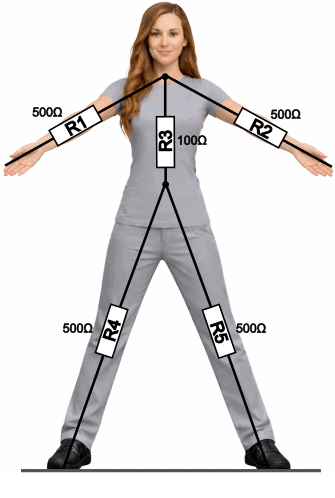
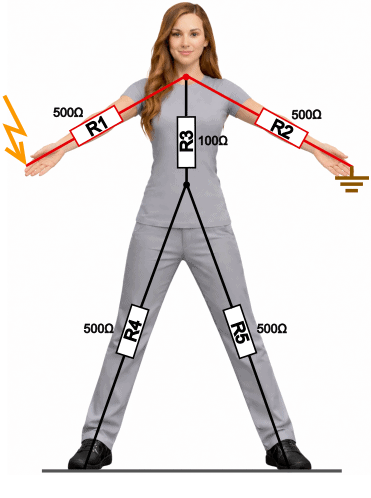
Body resistance is the resistance the body offers against electric current. Resistance is expressed in ohms. The image next to this shows the structure of the resistances in the limbs of a human body. From basic electrical engineering we know that if we connect the plus and minus of a voltage source with a circuit that contains resistors, current will flow. This is also the case with the human body when components of an electrical system that carry current are touched.
- At low voltages, the resistance of the skin provides sufficient insulation to prevent current from flowing through the body. That is why a mechanic can touch the battery terminals of a 12-volt battery (or twice 12 volts in series in a truck) with both hands at the same time without problems;
- At high voltages, skin resistance can decrease sharply due to puncture or burns. Muscle tissue and blood are good conductors. The body resistances determine how much current will flow at a given applied voltage.
The current through the body can range from noticeable to life-threatening. The human body is more sensitive to AC voltage than to DC voltage. Below, the current levels in AC and DC with the effects are shown.
With AC, relatively low current can already cause cardiac arrhythmias. That is why AC is extra dangerous around mains frequency (50 Hz). With DC, a cardiac arrhythmia occurs less quickly than with AC, but high currents do cause severe burns and cardiac arrest. Work on high-voltage systems of electric vehicles mainly takes place on the DC part, because the AC is only generated between the inverter and the electric motor in operating condition. At the moment the HV system is switched off, components are replaced or modules in the battery pack are dismantled, work is carried out exclusively on DC (direct voltage).
Hazard in practice 1:
At the moment a technical specialist has opened a battery pack and touches the metal connectors between the modules that have a voltage of 400 volts on them, the current depends on the resistances in the body. How dangerous that is also depends, among other things, on how long the contact lasts. More on that later.
To determine the current through the body, we first calculate the equivalent resistance of the series circuit:
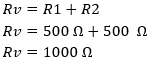
We calculate the current flowing through the body using Ohm’s law:

This current is immediately life-threatening.
Hazard in practice 2:
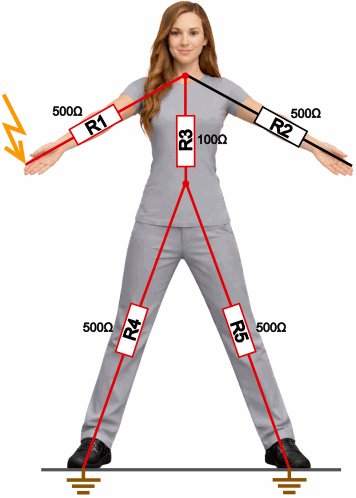
An electrician touches a conductor with one hand that has 230v (AC) on it. Ground is made via the feet. We calculate the equivalent resistance (Rv1) of the legs (parallel), then the series circuit of the arm and torso (Rv2) and add these equivalent resistances together (Rv3):

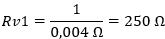


We calculate the current through the body using Ohm’s law:

This current can be endured for 0.2 seconds before it becomes life-threatening. So time plays a major factor in how dangerous a current is. This is explained in the next paragraph.
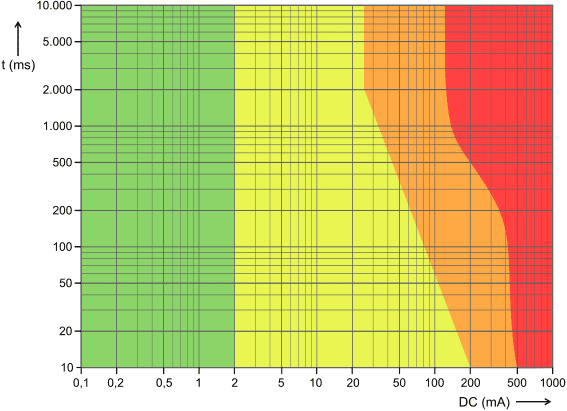
Current magnitude and the duration for which the current flows are the greatest hazards. The graphs below show four coloured areas in which the danger of current magnitude relative to time is displayed.
- Green: not externally perceptible;
- Yellow: externally perceptible, muscles cramp;
- Orange: muscle cramping, difficult breathing, letting go independently is no longer possible;
- Red: burns, respiratory arrest, cardiac arrest, so this area is life-threatening.
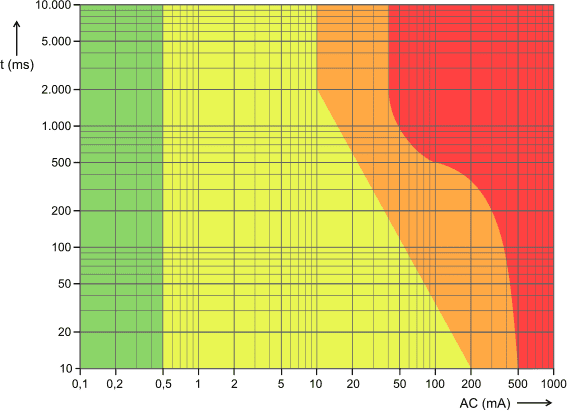
Effects of alternating current:
- Below 0.5 mA, nothing is perceived by a person;
- 10 mA can be tolerated by a person for about 2 seconds before the muscles start to cramp, and at 50 mA this is the case after about 100 ms;
- 500 mA is already immediately life-threatening.
Effects of direct current:
- Below 2 mA, nothing is perceived by a person;
- 80 mA can be tolerated by a person for about 100 ms before the muscles start to cramp;
- 500 mA is already immediately life-threatening.
NEN 9140 (working on vehicles):
For electric vehicles and mobile electrical equipment, the NEN 9140 standard applies. This standard applies to work on high-voltage systems in vehicles and focuses on vehicle-related components such as the HV battery, the inverter, the electric motor, the on-board charger and the air-conditioning compressor. Mechanics and diagnostic technicians who work on HV systems must be demonstrably trained and authorised through certification.
If a car workshop does not carry out any work on electric vehicles, they do not need any additional certification.
NEN 9140:2024 applies to e-vehicles in voltage class B. This concerns systems with:
- an alternating voltage of 30 V AC up to and including 1000 V AC;
- a direct voltage of 60 V DC up to and including 1500 V DC.
The standard describes how these risks must be controlled when working on the vehicle. This includes, among other things, safely de-energising the vehicle, checking whether the HV system is actually de-energised, and using the correct personal protective equipment. It also specifies what level of knowledge and experience the mechanic must have to carry out these tasks independently and responsibly.
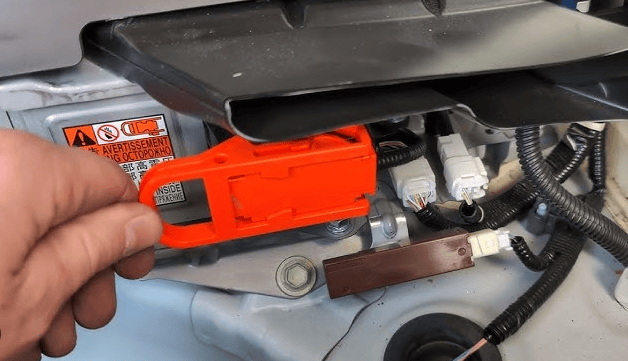
As long as the work is performed directly on the vehicle or the vehicle system—such as diagnosing the HV system, switching the vehicle to a de-energised state, or taking measurements on vehicle components—NEN 9140 applies. The image alongside shows the service plug of a Toyota, which can be used to de-energise the system.
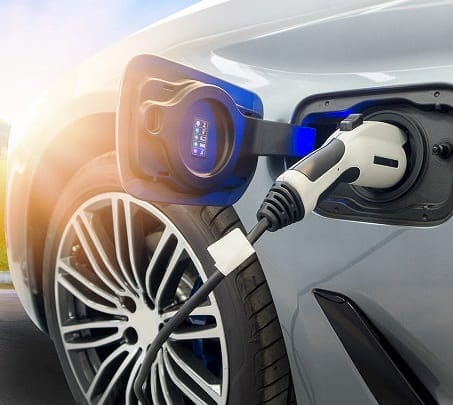
However, in the event of faults in the charging process, the cause is not always in the vehicle itself. The charging process consists of an interconnected whole of the vehicle, the charging equipment, and the charging cable. For a correct diagnosis, these components must be assessed together, because a defect in one of the components can affect the operation of the entire system. The charging equipment and the charging cable are not part of the vehicle and therefore fall outside the scope of NEN 9140.
These components are considered electrical installations, for which the NEN 3140 standard applies.
This standard applies to electrical installations and electrical tools with an AC voltage up to and including 1000 volts AC and a DC voltage up to and including 1500 volts DC.
For charging problems where measurements are carried out on the electric car, the charging cable and the wallbox, work must be performed in accordance with NEN 3140. For a diagnostic technician, it is therefore essential during fault diagnosis to determine which standard applies, because choosing the correct standard is crucial for carrying out the work safely and responsibly.
Persons and authorisations:
The NEN 9140 standard sets requirements for persons who perform work on or in the vicinity of electric vehicles. Everyone who works with e-vehicles must have sufficient knowledge of the safety risks present, the applicable safety rules, company regulations, relevant manufacturer information, and the correct use of personal protective equipment. This knowledge is necessary to be able to carry out work safely and responsibly.
Within NEN 9140, people are classified into different categories based on their knowledge, insight, experience and competencies. To comply with the Working Conditions Act (Arbowet), these persons must be appointed in writing by the responsible person within the company. This concerns the:
- sufficiently instructed person (VOP): may only carry out work under clear instruction and sufficient supervision.
- skilled person (VP): has sufficient education and experience to independently perform work on HV systems;
- person in charge of the work (WV): bears responsibility for the safe organisation and execution of work on electric vehicles.
The standard also mentions the “layperson”, describing that the layperson is not allowed to perform work on EVs.
Only persons appointed in writing may carry out work on electric vehicles, and only within their authorisations. Persons without technical training, such as sales staff or receptionists, are regarded as laypersons and may not perform work on electric vehicles. For maintenance work, an automotive technician must at least be appointed as an EV sufficiently instructed person. Work on high-voltage components, such as repairs to an HV battery, may only be carried out by an EV skilled person.
In the appointment, a distinction is made between level of education and competence.
- The level of education determines whether someone can qualify for a particular category.
- Competence is built through education, training and practical experience.
An automotive technician with education level 2 therefore cannot, even with extensive experience and additional courses, be appointed as an EV skilled person, but can be appointed as an EV sufficiently instructed person. An automotive technician with MBO level 3 can be appointed as an EV skilled person, provided that he or she has demonstrably been trained for work on electric vehicles, has sufficient practical experience, and has been appointed in writing by the employer. A diagnostic technician at MBO level 4 also meets these conditions and, due to their broader technical and diagnostic knowledge, is in practice the most suitable to be deployed as an EV skilled person or to progress to EV person in charge of the work.
Procedures:
Working safely on electric vehicles requires fixed and well-thought-out work procedures. These procedures ensure that electrical engineering risks are controlled and that work is carried out in a predictable and safe manner. NEN 9140 describes these work procedures as a logical set of steps, always based on risk assessment, clear responsibilities and controlled execution.
Prior to each task, it must be determined which risks are present. This involves looking at the condition of the vehicle (damage?), the nature of the work and the environment in which work is being carried out. Based on this, it is determined which working method is applied: working de-energised, working at a safe distance or, in exceptional cases, working live. Working de-energised is always preferred, because it removes the electrical hazard as much as possible.
When working de-energised on the HV system, a fixed sequence is always followed. This sequence is intended to prevent the risk of electric shocks and unintentional switching on.
- The vehicle is secured against unintended movement by applying the parking brake and removing the key or keyless fob. The vehicle must not be able to drive away or be activated unexpectedly;
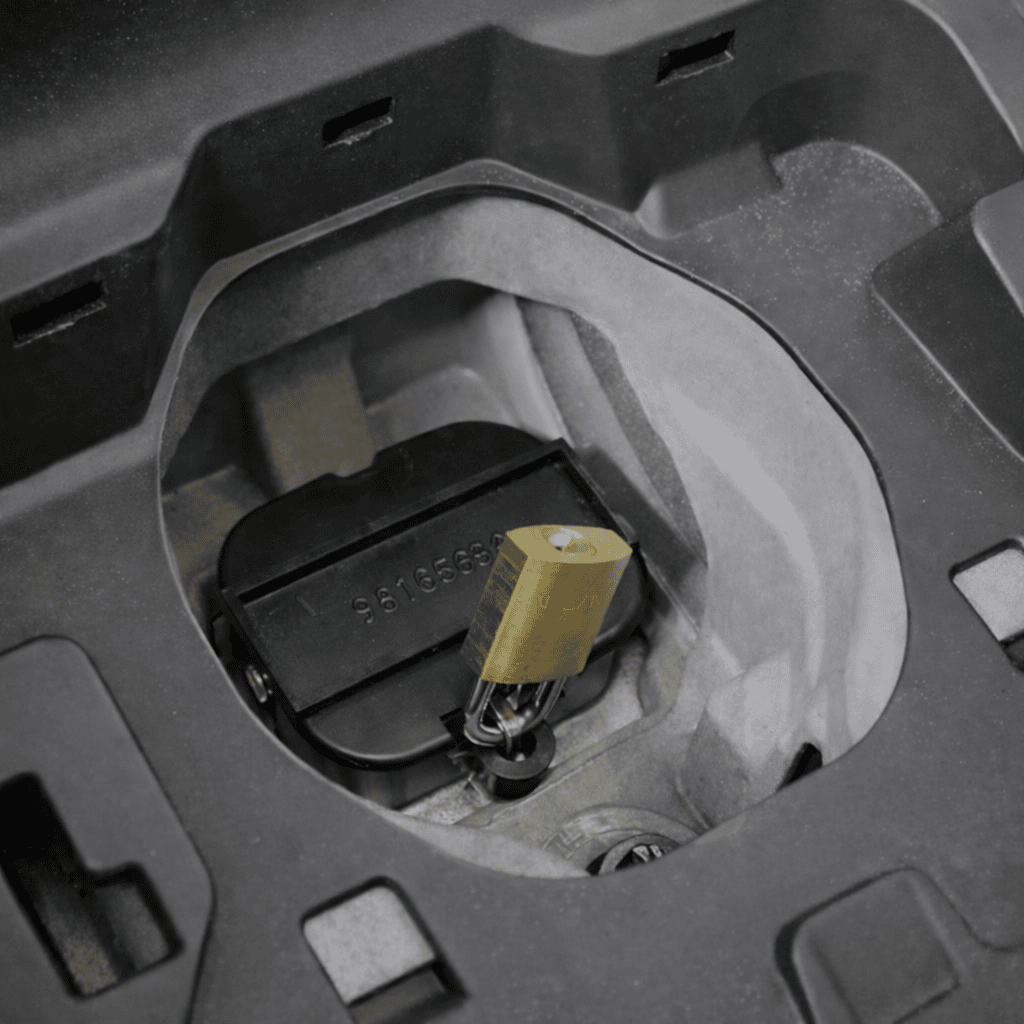
- The power source is physically separated from the HV system. This can be done by removing the service plug, which disconnects two parts of the battery pack from each other. The interlock connector can also be disconnected so that the system cannot switch on again. To prevent someone else from activating the vehicle during the work, a padlock can be fitted;
- Next, it is checked whether the HV system is actually de-energised. This is done with a suitable measuring instrument, such as a Duspol. Until this measurement has been carried out, the system may not be considered safe and no work may be performed on the HV system.
- After completion of the work, the vehicle is put back into operation according to a fixed procedure. This includes checking whether all safeguards have been correctly reinstalled and whether the vehicle can be used safely.
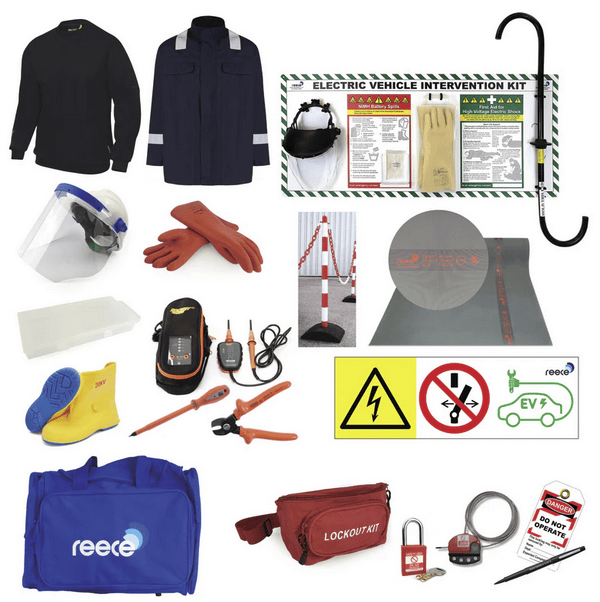
To be allowed to work on high-voltage systems, specific personal protective and safety equipment is prescribed:
- Safety helmet with face shield (protection against electrical and mechanical risks);
- Insulating gloves (for work on or near high-voltage parts);
- Protective workwear, such as an insulating jacket and coveralls with reflective sections;
- Safety shoes or insulating overshoes (protection against electrical breakdown and mechanical injury);
- Insulating mat (for standing safely when working on electrical installations);
- Voltage tester (e.g. a Duspol or comparable two-pole measuring instrument);
- Insulated tools (such as pliers and screwdrivers suitable for HV work);
- Barrier materials, such as cones or barrier posts (to mark the work zone);
- Warning signs and pictograms (high voltage, prohibition signs);
- Lockout-tagout equipment, such as locks, tags and a lockout pouch (to secure against switching on again);
- First aid and intervention kit for electric vehicles.
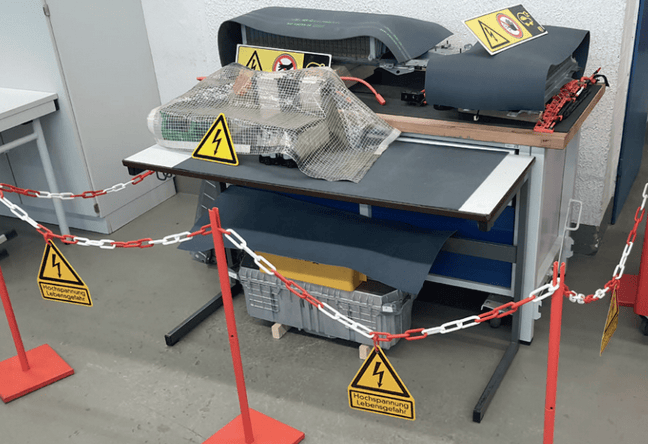
Workplaces where electrical hazards may occur must be clearly marked and cordoned off. Only authorised persons may enter these zones. Non-involved persons must keep their distance at all times to prevent the risk of accidents. Tools, measuring instruments and personal protective equipment must be suitable for working on HV systems and must be checked regularly to ensure they are in good condition.
Finally, good communication is essential. The EV person in charge of the work must ensure that everyone involved knows what work is being carried out, what risks are present and what safety measures apply. If, during the work, it appears that the situation is unsafe or differs from expectations, the work must be interrupted immediately. Work may only be resumed after new measures have been defined and implemented.
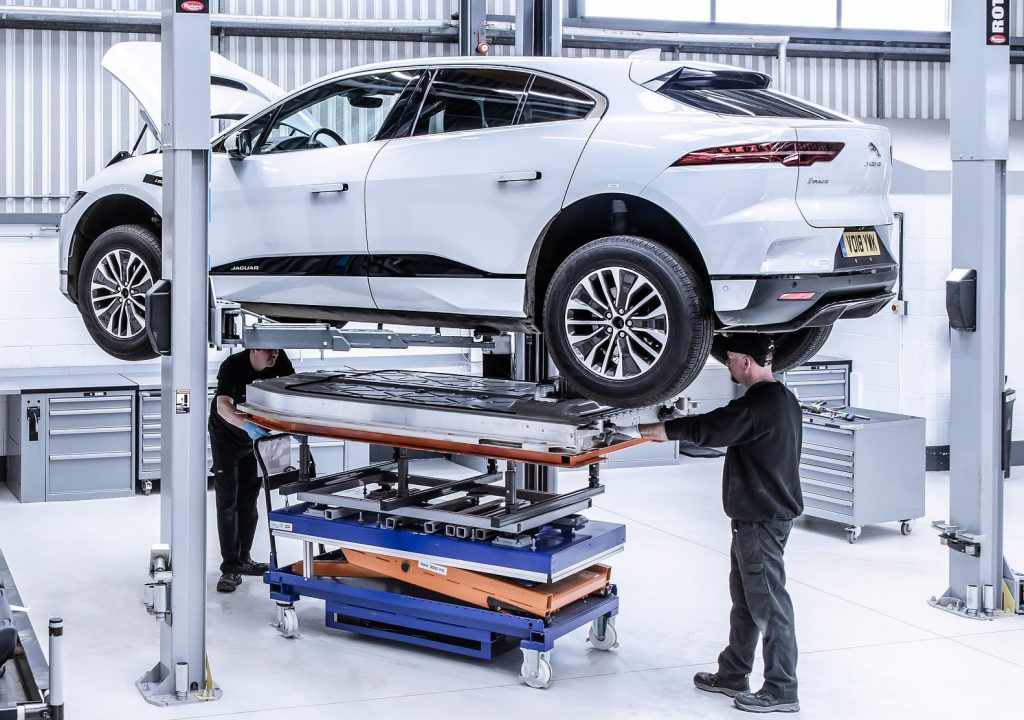
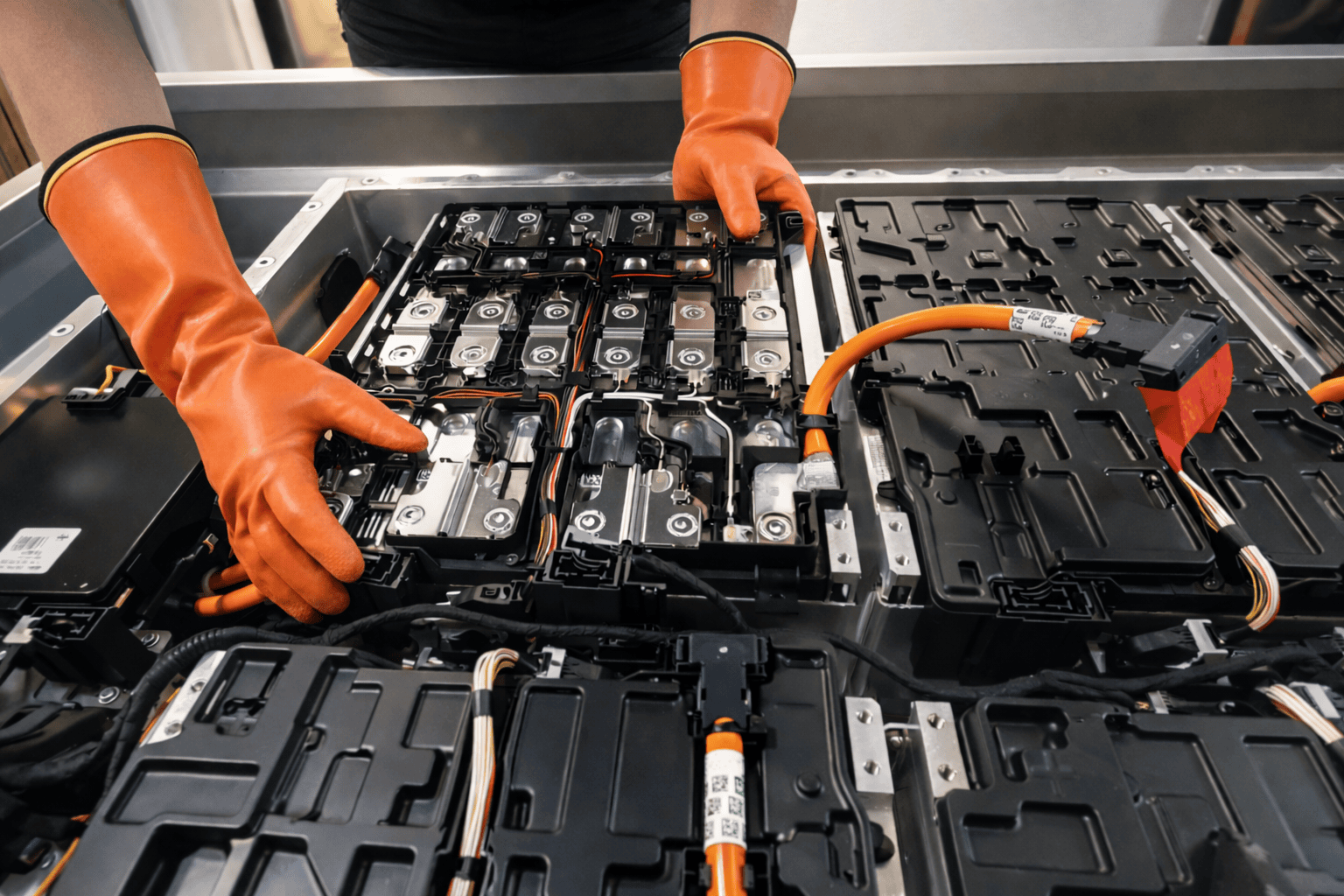
The image below shows a module with cells from an EV battery pack being dismantled. A large part of the procedure has already been followed: the vehicle has been immobilised, de-energised, the area has been cordoned off with tape and cones, and personal protective equipment has been put on.
After removing the cover, the modules have been disconnected from each other. No current can flow from module to module anymore. This ensures that work is carried out de-energised. The modules can then be removed. That moment is shown in the image.
In some situations, working de-energised is not possible, for example during specific measurements or functional checks. Working live is then only permitted under strict conditions and may only be performed by authorised and sufficiently competent persons. Additional requirements apply regarding training, working methods, tools and personal protective equipment. The work environment must also be set up in such a way that risks are minimised.
Working live:
Working live on electric vehicles is permitted within NEN 9140 only in specific cases where working de-energised is technically not possible, for example during certain measurements or functional checks. Because increased risks are present, working live is considered an exceptional method that may only be applied under strict conditions.
This work may only be carried out by authorised and competent persons, such as an EV skilled person or an EV person in charge of the work. A risk analysis must be carried out in advance, assessing among other things the nature of the voltage, the touch hazard and the risk of arc formation. Non-appointed persons may only be present under direct supervision.
Working live must never become routine. Working de-energised always has priority, and working live is only permitted when it is demonstrably necessary and all safety measures have been taken. This limits the risk of electrical accidents during work on electric vehicles as much as possible.
Arc flash:
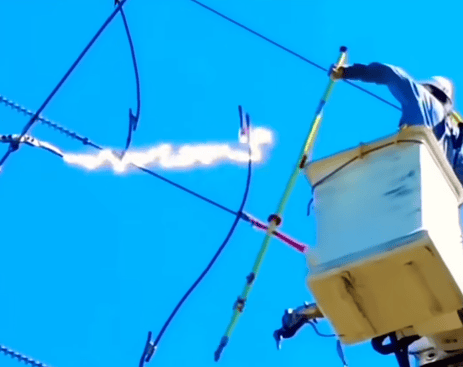
In HV systems, an arc flash can occur when a short circuit is created with tools, insulation is damaged, or when working live and conductors touch each other. An arc flash is an electrical discharge through the air between two conductors with a voltage difference. Normally air is an insulator, but when the electric field strength is high enough, the air becomes ionised. As a result, the air temporarily becomes conductive and current can flow through it. This very high current creates a flash of light and extremely high temperature, which can be hazardous to health.
The page Arc flash goes into this in more detail and shows calculations with which the incident energy can be determined, so that the correct personal protective measures can be selected.
NEN 3140 (working on electrical installations):
The NEN 3140 standard relates to the safe operation of electrical installations.
Operation means everything that happens with an electrical installation after it has been installed and put into use. This includes, among other things, maintenance, inspections, measurements, repairs, implementing modifications, and recording work and checks.
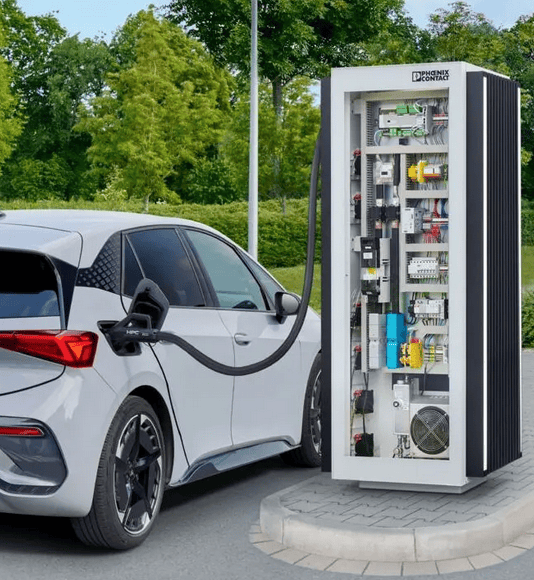
For charging equipment, this means that tasks such as measuring electrical parts, inspecting charging cables, replacing defective components and testing the installation after repair fall under NEN 3140. Installations that were safe at commissioning can still become unsafe due to wear, damage or incorrect use. For this reason, NEN 3140 stipulates that work must always be carried out according to established procedures and with subsequent inspections at intervals of no more than five years.
The risk of touching a component that causes a dangerously high voltage, short circuit or arc flash is high during work on electrical installations. It is therefore not permitted to perform live work on, or near, a high-voltage system, except where there is a demonstrable necessity or an assignment has been given to the VP.
Persons and authorisations:
Within NEN 3140, work on electrical installations may only be carried out by appointed persons. The employer is responsible for this appointment and records in writing what tasks and responsibilities an employee has. If no installation manager has been appointed, the employer is automatically the installation manager.
The installation manager (IV) has ultimate responsibility for the safety of the electrical installation. He or she determines under what conditions work may be carried out on the installation and establishes the necessary safety measures. The person in charge of the work (WV) is responsible for the safe execution of specific tasks and ensures that the agreed procedures are followed. The skilled person (VP) has sufficient knowledge and experience to independently perform work on electrical installations. Persons without an appointment may not carry out work on electrical installations.
High voltage (HV) and extra-low voltage (ELV):
NEN 3140 applies to electrical installations with an AC voltage up to and including 1000 volts AC and a DC voltage up to and including 1500 volts DC. For very low voltage, the term extra-low voltage (ELV) is used. This concerns voltages that do not present a danger under normal circumstances, such as 12-volt and 24-volt systems.
Although work on ELV circuits involves less risk, this work may also not be carried out without restriction by everyone. Students and minors may only carry out work on electrical installations when this fits within their level of education and under sufficient supervision. Work on high-voltage parts or on parts that are indirectly connected to higher voltages is not permitted for them.
Working on charging equipment and outdoor conditions:
When working on charging equipment, the working environment must be taken into account. When working on charging equipment outdoors, work must not be performed during thunderstorms or in conditions where safety cannot be guaranteed. In rain or damp conditions, additional measures must be taken to reduce the risk of electric shock. If this is not possible, the work must be postponed.
Tools, measuring instruments and personal protective equipment must be suitable for the work and be in good condition. The workplace must be set up in such a way that unauthorised persons cannot access the hazard zone.
Relationship between NEN 3140 and NEN 9140:
For charging problems where measurements are carried out on the electric car, the charging cable and the wallbox, work is being performed on electrical installations. In these situations, NEN 3140 applies. For a diagnostic technician, it is therefore essential to determine in advance whether they are working on the vehicle itself or on the electrical installation. The correct choice of standard determines which procedures must be followed and is therefore decisive for a safe and responsible execution of the work.
NEN 1010 (installing installations):
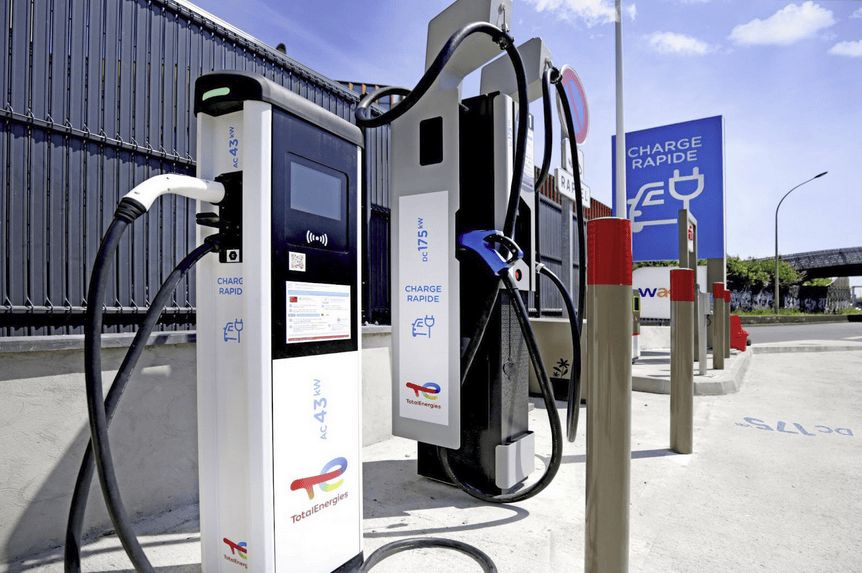
Before charging equipment, such as a public charging station or a wallbox at a home, is put into use, it must have been installed correctly and safely. The requirements for this are laid down in the NEN 1010 standard. This standard describes how electrical installations must be designed and installed so that they operate safely for users and the environment.
When charging equipment, such as a public charging station, is installed according to NEN 1010, the electrical installation meets national safety requirements. In addition, international standards apply to the charging equipment as an electrical product, such as IEC 61851. This standard specifically focuses on safe charging of electric vehicles and communication between the vehicle and the charging equipment. The distinction between NEN 1010 and NEN 3140 is essential here.
NEN 1010 focuses on the design and installation of the system.
Once the installation has been put into use, NEN 3140 applies.
This standard describes how work must be carried out safely during use, maintenance, inspections and the implementation of modifications. A charging installation that meets all requirements at commissioning can, due to daily use, weather influences and mechanical loading, see components deteriorate over time. Examples include damaged connectors, worn charging cables or loosened connections in the installation.
To continue to ensure safety, periodic inspections are necessary. During these inspections, it is assessed whether the installation can still be used safely and meets the applicable requirements.
Related pages: