Oil Pan:
Almost every gasoline and diesel engine has an oil pan mounted underneath. This is called a “wet sump system.” Engines without an oil pan use a dry sump system. The oil pan is, among other things, the storage place for oil. When the engine is off, 90% of the oil collects here. The rest is located in parts such as the cylinder head, oil pump, turbo, etc. Click here for more information about motor oil. The oil strainer (through which the oil is drawn via the oil pump) is located at the lowest point of the pan.
There is almost always a drain plug at the bottom of the pan. This is located at the lowest point and is intended for draining the oil during, for example, a service.a0There are engines (e.g., from an old type Smart) that do not have a drain plug. In these cases, the oil must be sucked out through a tube with a special extraction device.
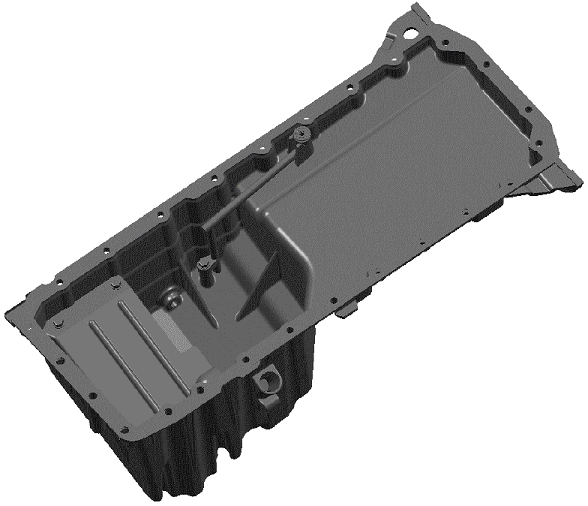
The oil pan in the image below is from a BMW. It is relatively shallow. Some other examples are much deeper. This completely depends on the engine construction with the crankshaft, etc.
There is always a gasket between the engine block and the top of the oil pan. This can be made of paper, cork, or rubber, but in most cases, it is liquid gasket. This gasket dries when exposed to air.
In the oil pan, a so-called “crankcase pressure” builds up. The undersides of the pistons/cylinders open into this area. The pressures are caused by, among other things, blow-by gases passing by the piston rings. These crankcase vapors must be extracted by the engine. See the page crankcase ventilation.
Oil Strainer:
The oil pump draws oil from the sump and pumps it into the lubrication channels. At the beginning of the suction pipe, there is a strainer (sometimes also called a sump filter). This strainer is used to stop large dirt particles before they enter the oil pump. The strainer can become clogged due to, for example, black sludge (by driving with old engine oil) or sludge from burning engine oil. This latter can happen if the exhaust runs under or very close to the oil pan. If the engine is heavily loaded and the exhaust becomes extremely hot, and the engine is turned off too quickly, the heat from the exhaust transfers to the pan. The oil, which is already very hot, can burn at the oil strainer. This is, for example, a known issue with certain types of VW Passat, Audi A4, and Skoda Superb with a 1.8 turbo engine where the engine is mounted longitudinally.
The oil pressure light (red) may come on under certain conditions. It is then necessary to check the strainer for contamination, clean it if necessary, and preferably replace it.
Removing/Installing the Oil Pan:
For oil pan gasket leaks or damage to the pan, the pan must be removed. First, the engine oil must be drained. Depending on the engine type, part of the exhaust (if it runs underneath) will also need to be removed. Sometimes the subframe needs to be lowered. If there is enough space under the pan, all screws can be loosened. The pan will be adhered to the engine block by the gasket, which holds both parts together. Carefully remove the pan.
Once the pan is off, the old gasket material will still be stuck everywhere. Alternatively, it might be a removable rubber gasket, which is the easiest to replace. With loose gasket material, all old gasket residues must be removed from both the pan and the engine block. Do not use coarse sandpaper for this, as it can create (deep) scratches that can fill with engine oil. Both surfaces must, of course, remain as flat as possible.
After degreasing everything, it’s time to apply the new liquid gasket. Do not apply too much; if over-applied, parts of the gasket can end up in the pan during assembly, potentially clogging the oil strainer. Spread the gasket thinly over the entire assembly surface of the pan and remove any excess gasket.a0After assembly, engine oil can be added fairly quickly. However, it is recommended to let it dry for at least an hour before driving the car.