Connecting with specialists in automotive technology, learning, and sharing knowledge. This is my goal as Marco van Wijk, the owner and author of the website you are currently visiting, to increasingly seek collaboration with AMT. Over the past two years, I have written several articles for the so-called “Back to Basics” section. As the topics align with diagnostic and repair tasks in daily practice, there was a request to provide an explanation of the B2B topics at AMT-live. Before a large audience, I have held several knowledge sessions as a speaker.
The overview below shows the published back-to-basic articles and the knowledge sessions I provided for AMT-live.
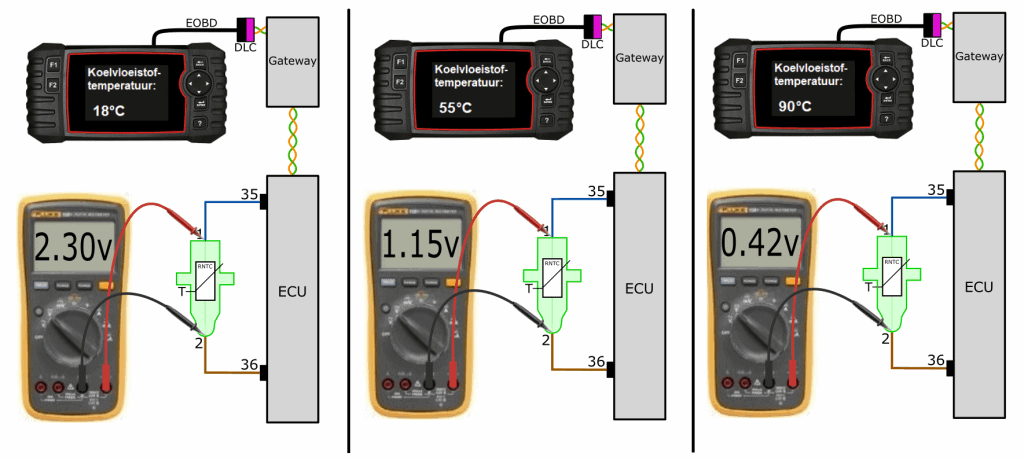
AMT July – August 2020: Measuring at Sensors (Part 2):
Where part 1 of “Measuring at Sensors” focused on theoretical knowledge, part 2 addresses practical applicability in the workshop. With knowledge about sensor operation, multiple examples with possible malfunctions, and measurement techniques to make a proper diagnosis, theory and practice come together well in these two articles.
AMT June 2020: Measuring at Sensors:
Malfunctions in sensor wiring can lead to interesting measurements that can be confusing. This was evident from the reactions I received on my knowledge session at AMT-live 2020. That calls for further explanation! For this reason, I wrote a two-part article about sensors: the operation of sensors (edition: July 2020) and signal transmission and processing (edition: August / September 2020).
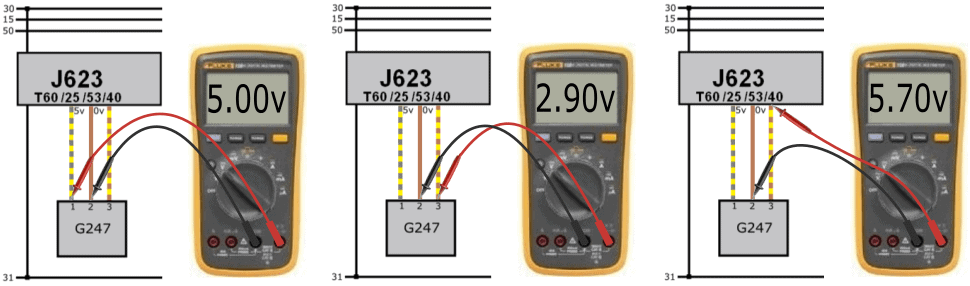
AMT Prof – AMT Live 2020: Reading Schematics, Know What You Measure!
Articles about reading schematics are highly desired. This has been shown from previous editions written by other instructors in the B2B section, and from the recent article about PWM control. It was my task to give an interesting and practically applicable lecture about reading schematics. Not a tough, abstract lesson, but a recognizable case, where reading, schematic reading, and measuring sensors were central.
AMT May 2019: Diagnostics Provide Fuel for Thought:
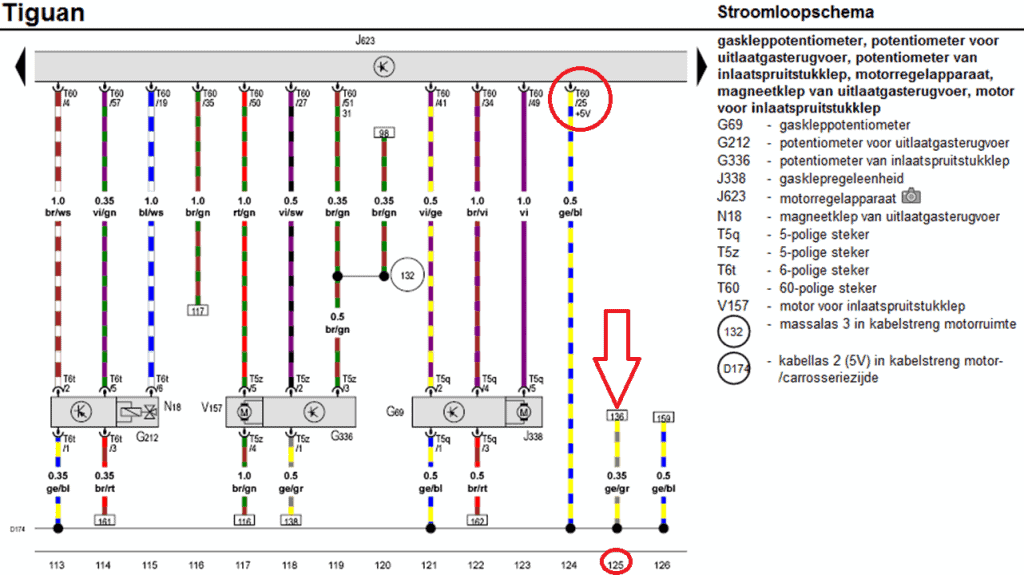
Reading schematics and measuring with an oscilloscope is one of the competencies that a diagnostic technician must master. This article described a deviation in PWM control of a solenoid valve. The oscilloscope showed a transition resistance in the PWM signal. How the transition resistance could be determined, and why there was no induced voltage from the coil, was extensively explained using several subsystems and a component overview in the ECU.
AMT Prof – AMT Live 2019: Fuel Trims Aid in Diagnostics
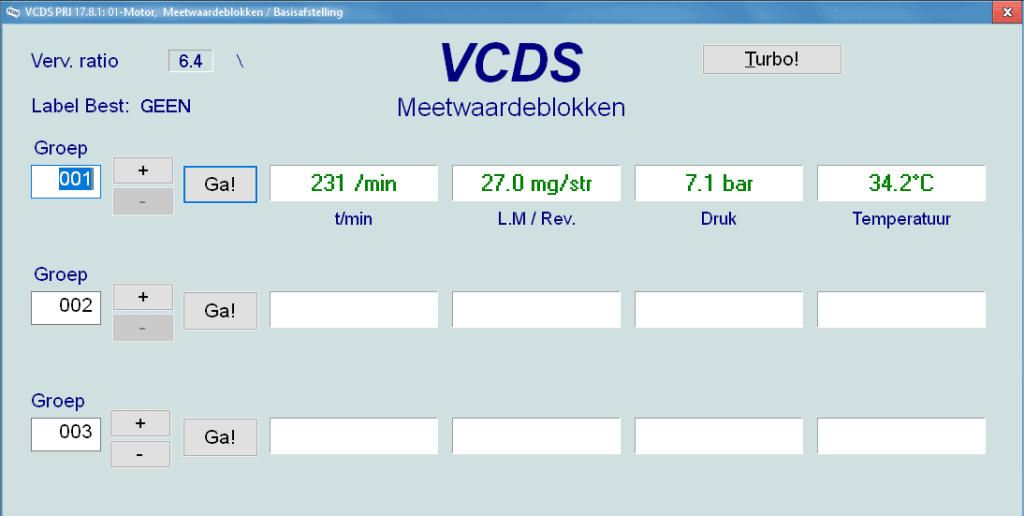
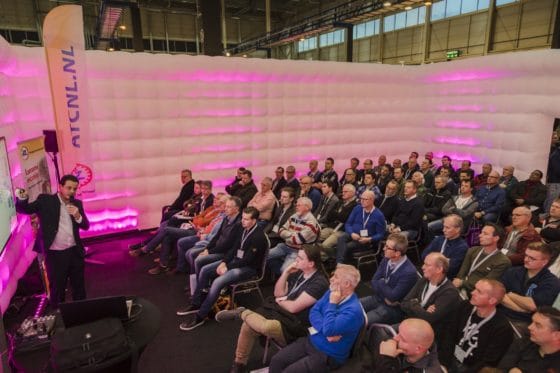
In a knowledge session at the AMT-live in January 2019, I explained the article. The knowledge session was attended by a large audience. In the three sessions (one per evening), the tuner studio parameters were discussed to show which factors actually determine the base injection amount. Subsequently, the fuel trims were discussed: they form a corrective factor on the standard value from the parameters, including factors influenced by driving conditions. The fuel trims can be used to see if there is an excess or shortage of fuel or air, resulting in malfunctions or reduced engine performance.
AMT September 2018: Fuel Trims Aid in Diagnostics:
On the AMT garage forum, questions often arise about trims during failures: a positive or negative fuel trim indicates whether there is a shortage or excess of air or fuel. The values in the fuel trims can guide the diagnosis. In the article, we discuss how the quantity of injected fuel is determined, and how the fuel trims serve as a corrective factor.
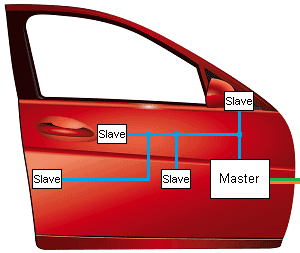
AMT January 2018: Troubleshooting in LIN Bus:
The first article I was allowed to write for the Back-to-basics section in AMT. The reason for writing this article is quite comical: in Electude, I found several images that originated from my website. My fear was that it was the start of copy-and-paste activities. Fortunately, it turned out to be a mistake, and it was resolved. Through the Electude staff member, I ended up at Stichting COM, who had been providing articles in the Back-to-basics section in the AMT magazine for a long time. Subsequently, I was asked to write a first article about a recognizable technique, addressing the technical operation, with a focus on the practical applicability of diagnostics. In response, I wrote the article focusing on LIN bus communication. The LIN bus control of the windshield wiper motor, as well as the conventional voltage-controlled windshield wiper motor, were covered.