Instrument Panel:
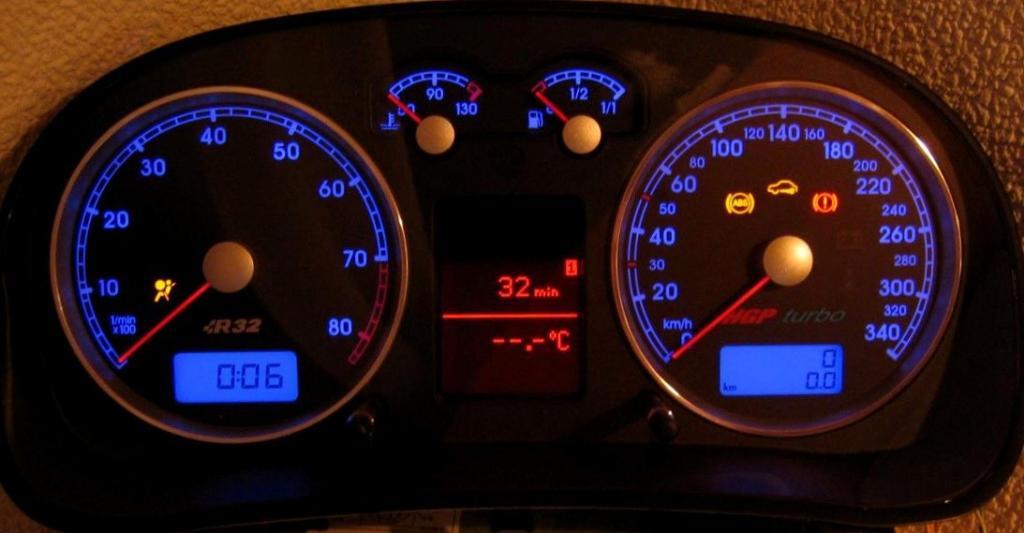
In almost every dashboard, an instrument panel is installed. These can be either analog (with moving needles) or (partially) digital. The instrument panel contains the gauges (tachometer, coolant temperature gauge, fuel gauge, speedometer), the clock and odometer, the indicator lights for airbag, ABS/ASR, coolant level/oil level light, handbrake warning light, alternator (battery) light, etc.
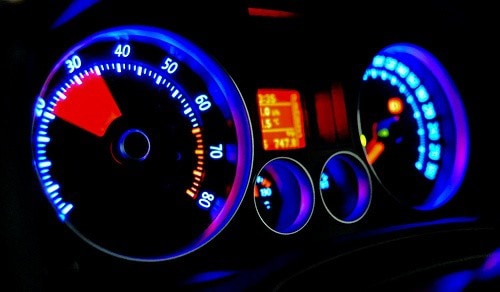
In the instrument panel in the image below, there is also an onboard computer built-in. The temperature of the engine oil, fuel consumption, average speed, a stopwatch, etc., can be viewed here. The onboard computer screen may also display RDS (the radio stations and the RDS text are displayed there).
In many cars, the immobilizer is also programmed into the instrument panel. If the responder in the key is not recognized, the engine will not start. Only when the code transmitted by the key is recognized by the immobilizer in the instrument panel can the car be started. This is a theft prevention system and is also referred to as a class 1 (alarm/security) system. The immobilizer light is also illuminated in the image below (the car with the key in the top right corner). The keys need to be programmed using a diagnostic computer via the OBD connector.
Indicator Lights:
There is often much confusion about the meaning of the indicator lights that may illuminate on the instrument panel. Below are many common lights that can illuminate, along with their meanings and possible causes:
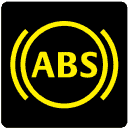
ABS: Malfunction in the ABS system (possibly in the sensor, cable, or control unit).
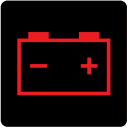
Battery: Possibly a failure in the alternator. This light always illuminates when the ignition is on and the engine is off. Once the engine starts, this light should turn off if the system is functioning correctly.
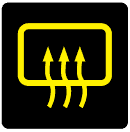
Rear Window Defroster: This light is usually not displayed on the instrument panel but on the switch for the rear window defroster.

Airbag: This light indicates a fault in the airbag system. There may be a problem in the wiring, an airbag component, a crash sensor, or the control unit.

General Warning: This light usually comes with a text warning like; close the door before driving off, etc.
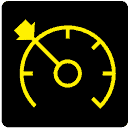
Cruise Control: The cruise control light can also be green or red (brand dependent). The light will illuminate when the cruise control is turned on or off.

Lighting Warning: The system has detected a faulty lamp. The driver will need to check which lamp is defective.
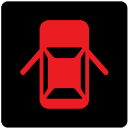
Door Signal: One or more doors are open.

Hazard Warning: This symbol is always on the hazard light switch, which should be used in situations to alert other road users of a potentially dangerous situation.

Glow Plug: In a diesel engine, the glow plug is displayed when there is a problem with the pre-glow system. In some models of the VAG group, this light will also illuminate when the brake light switch is defective or if all brake lights in the car are defective.
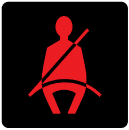
Seat Belt Warning: When the driver or passenger does not fasten the seatbelt, the light will illuminate (possibly in combination with a sound signal).
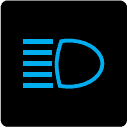
High Beam: This indicator light illuminates when the high beam is turned on.
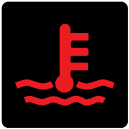
Engine Cooling: The engine’s cooling system is overheating; possibly due to low coolant level, lack of cooling from a defective cooling fan, or a faulty sensor.
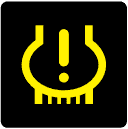
Tire Pressure: This light illuminates when the tire pressure monitoring system has detected a flat tire. This light may also be red (brand dependent). Stop the car at the next opportunity to check or repair the tire pressure or to install the spare wheel.
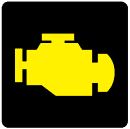
Check Engine Light (MIL): The MIL illuminates when an engine fault is stored. It may also illuminate alongside an EPC (emission) light.

Rear Fog Light: The indication for the rear fog light should illuminate on the switch or the instrument panel when it is turned on.
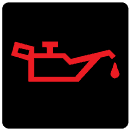
Oil Pressure Warning: If the oil can light is red, there is an issue with the oil pressure. Stop the engine immediately to prevent engine damage. Possible causes include low oil pressure due to a defective oil pump, clogged lines/strainer, significantly low oil level, etc.
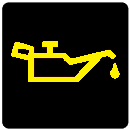
Oil Level Warning: A yellow oil can indicates a low oil level. The level will be at or below the minimum mark and needs to be refilled as soon as possible.

Brake System: The light has multiple functions; as an indication of the engaged handbrake, a warning for low brake fluid level, and a notification for worn brake pads.

Turn Signals: One of the arrows will illuminate when indicating a turn.
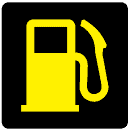
Fuel Level Warning: When the fuel light illuminates, the fuel level is very low. This is often referred to as the “reserve,” which usually amounts to around 5 liters of fuel. Refueling should occur soon.
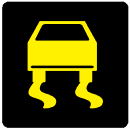
Anti Slip Regulation: The ASR/DSC is turned off. This may be due to a malfunction or manually deactivated.
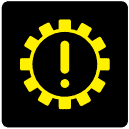
Transmission Fault: There is a fault in the automatic transmission (gearbox). Possibly due to low oil level, worn clutches, or worn brake bands, causing internal slip detection.
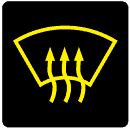
Windshield Defogger/Heater: For a fogged or frozen windshield, it can be heated to provide clear visibility.
Tachometer:
The tachometer is a component in the instrument panel and displays the number of ‘revolutions’ the engine makes. The revolutions per minute are measured at the crankshaft and registered by the crankshaft position sensor. When accelerating or decelerating, the gauge indicates the crankshaft speed, hence the engine RPM. When the gauge, for example, shows 30, it should be multiplied by 100. (It often also says x100). This means the engine makes 3000 revolutions per minute. When this 3000 is divided by 60 (3000/60), it results in 50Hz (Hertz). The engine then rotates 50 times per second.a0Thus, each RPM can be divided by 60 to calculate the crankshaft rotation speed in seconds.
Digital or Analog Input for the Tachometer:
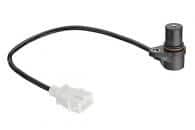
In modern cars, the crankshaft speed is measured by an impulse sensor. On the flywheel, a specific part is detected (by a wide or missing tooth on the ring gear) that rotates past the sensor with each crankshaft rotation. Each time this part passes the sensor, the sensor measures that the crankshaft has completed one rotation. The sensor measures the number of revolutions over a certain period and relays this to the engine control unit and the tachometer in the instrument panel.
Click here for more information about the crankshaft position sensor, where the operation of both the inductive and Hall sensor is explained with the help of scope images.
Cars from up to the 1990s were not yet equipped with computers and (digital) sensors. Mechanics still prevailed. The tachometer was not yet driven by an ECU. In cars from that era, we find the following techniques:
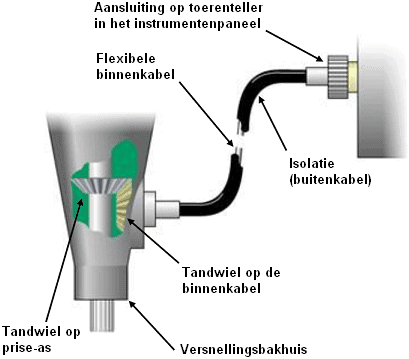
- A mechanical connection between the gearbox and the tachometer: a flexible, rotating cable transfers the motion from the gear in the gearbox to the tachometer. In the gearbox, the cable is driven by the input shaft (of the gearbox);
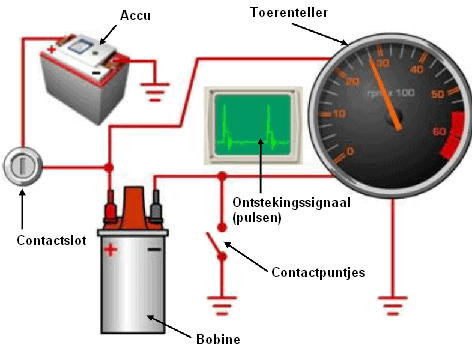
- Electrical signal from the ignition coil: the interruption of the primary coil provides a pulse for the tachometer. The number of alternating pulses per unit time gives the tachometer input to display RPM in revolutions per minute;
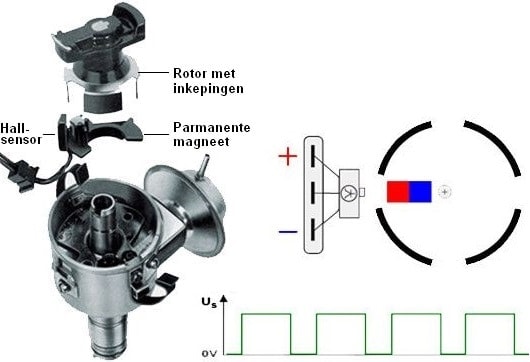
- Electrical signal from the distributor: in the distributor of a conventional ignition system, the rotor rotates to guide the energy from the coil to the correct spark plug wire. This rotor has a (rotor) plate with notches clamped on, which rotates past the Hall sensor. The magnetic field between the permanent magnet and the rotor plate with notches changes upon rotation. The Hall sensor converts this magnetic field into a square wave signal. An increasing crankshaft, and therefore rotor RPM, results in a higher frequency of the block signal. The tachometer translates this block signal into RPM in revolutions per minute.
Interactive Digital Instrument Panel:
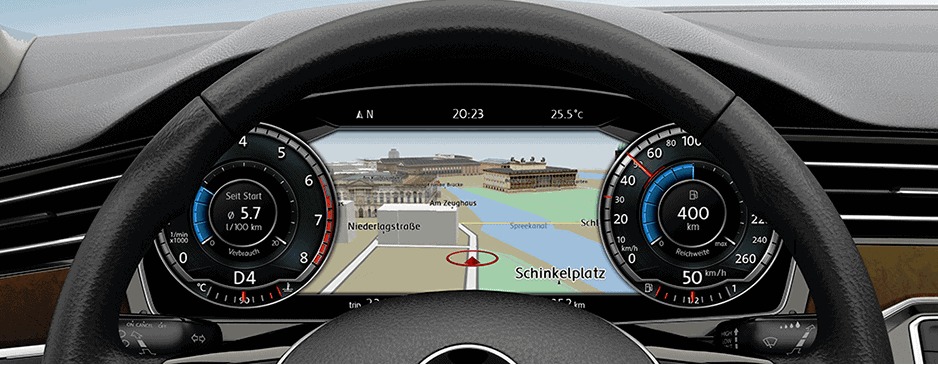
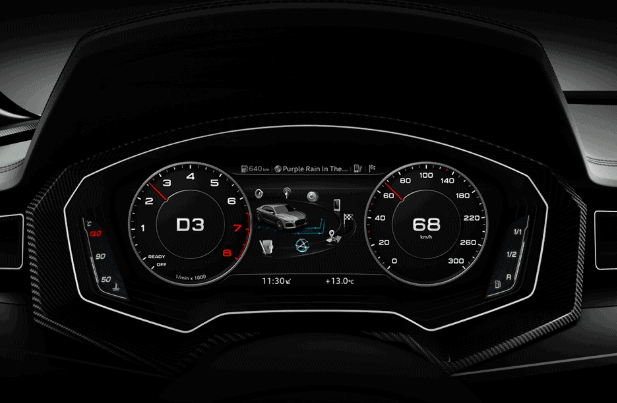
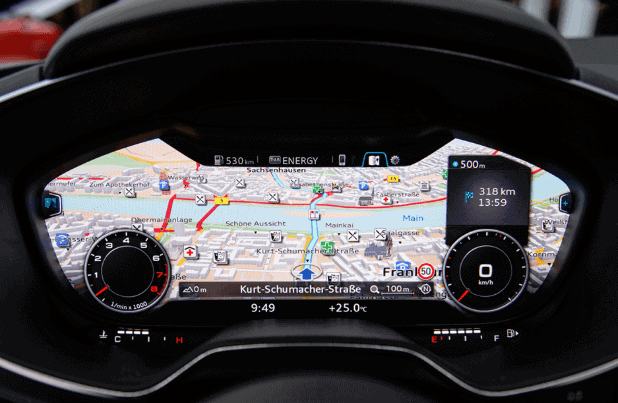
In more and more cars, the instrument panel with analog dials is being replaced by a digital instrument panel. It features an LCD screen with possibly a few physical indicator lights.
All instruments are fully visualized through software. The image shows the digital instrument panel of an Audi. The navigation screen is displayed between the tachometer (left) and speedometer (right).
The digital instrument panel offers many advantages over the conventional analog gauge panel:
- Navigation maps can be zoomed in the driving direction while the radio/infotainment screen in the center console displays a top view. The two navigation displays provide the driver with a good route overview;
- Instead of navigation maps, images of phone contacts, radio stations, CD covers, night vision, traffic sign recognition, and a torque/power meter can also be displayed;
- The display can be customized to the driver’s needs. This includes adjusting the display of gauges (large/small), changing colors, or showing extra or fewer functions. The round gauges can also be replaced by a different interface type, so only numerical speed is shown.
Stepper Motor:
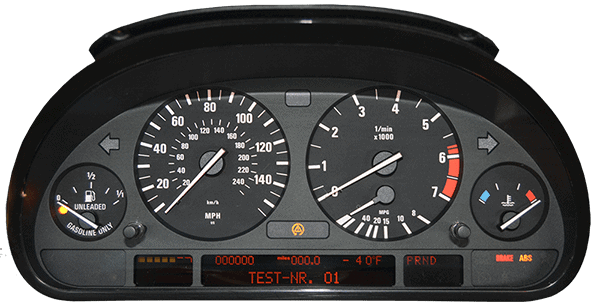
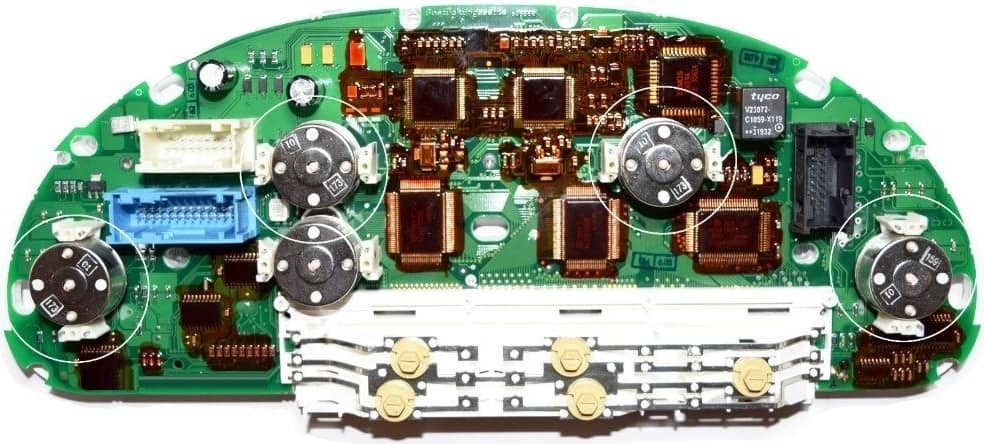
An instrument panel often contains several stepper motors to move the needles. In the images below, the combo instrument panel (front and interior) of a BMW is shown. On the page about the stepper motor, we delve deeper into the operation and applications of the stepper motor.