Gasoline Production:
Gasoline is derived from crude oil. Crude oil originates from small creatures and plants that died in the oceans centuries ago. These sank to the seabed and over the centuries were covered with mud and sand, forming layers hundreds of meters thick. Under the pressure from these layers and the seawater, layers of salt, solid, and porous rock formed. Through bacteriological processes, high temperatures, and high pressures, crude oil was formed from the organic remnants in the porous rock. Crude oil is a mixture of hydrocarbons. It consists of 84-87% carbon, 11-14% hydrogen, 3% oxygen, 1% sulfur, and 0.5% nitrogen. Through atmospheric distillation in a distillation column, hydrocarbons with different boiling points are separated. This results in gas, motor gasoline, kerosene, diesel oil, and fuel oil.
Octane Rating (RON):
The octane rating is indicated with the RON number. It signifies the anti-knock rating of gasoline. (RON = Research Octane Number). In the Benelux, two types of gasoline are available: RON (Euro) 95 and RON 98 (Super). In Germany, we also find unleaded gasoline with octane numbers 91 and 102.
The octane rating indicates the degree to which gasoline resists detonation.
- The lower the number, the higher the likelihood of the gasoline igniting.
- The higher the number, the lower the likelihood of ignition.
This means that in a car suitable for RON 98, only RON 98 should be used. Using RON 95 results in premature ignition of the mixture, causing the engine to detonate (ping). The piston will then compress an already igniting mixture. The consequences include overheating and potential severe engine damage (e.g., a hole in the piston, burned valves). Conversely, it is permissible to use RON 98 instead of RON 95. The engine generally does not run better or faster, and it is considerably more expensive. This option allows one to avoid fuels containing bio-ethanol (E10).

Bio-ethanol (E5 and E10):
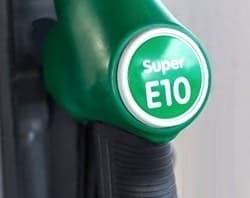
Euro 95 is being replaced by E10: gasoline mixed with between 7.5 and 10% bio-ethanol. Previously, this percentage was a maximum of 5%. The introduction of bio-ethanol aims to reduce CO2 emissions. Increasing the content from 5 to 10% bio-ethanol reduces emissions by 2 percent. Since October 1, 2019, gas stations with multiple pump installations are required to offer E10 in at least half of their dispensers. This is highlighted at the pump with the label: Euro 95-E10.
Bio-ethanol contains less energy than gasoline. The engine management system compensates for the fuel shortage with fuel trims. This results in more fuel being injected per work cycle, leading to higher fuel consumption. Where an engine management system automatically adjusts the injection amount, engines equipped with a carburetor face problems: the carburetor does not compensate the mixture.
As a result, a carbureted engine can run lean. Heat development and fuel consumption increase even further. Additionally, there is an increased risk of contamination and defects. These issues are further discussed later in this section.
Another property of bio-ethanol is its anti-knock rating: E10, due to the bio-ethanol mixture, has an octane rating of 98.9.
Since ethanol was first mixed with gasoline, problems have arisen, which have only increased with the introduction of E10. These issues arise partly because current engine parts are not compatible and due to ethanol’s shelf life and its property of attracting water.
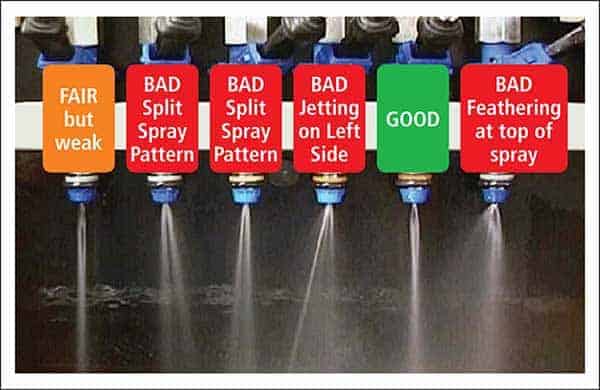
This causes contamination, sludge formation, and varnish formation throughout the fuel system. Here is a summary of the most common problems:
- In all vehicles (including those where E10 is the recommended fuel) and motorized lawnmowers, chainsaws, etc., that are used after long periods of inactivity, such as after winter storage, injection problems can occur due to ethanol corrosion, rubber and plastic part deterioration, and injector clogging.
- Gasoline engines experiencing starting issues, like requiring extended cranking before starting, may suffer from bio-ethanol effects. Typically, filling up with a premium fuel (RON 98 E5) makes a difference after just one tank.
- Certain engines with parts not resistant to bio-ethanol will undeniably experience fuel problems shortly. See the website: https://www.e10check.nl.