Introduction:
Vehicles with automatically controlled air conditioning systems are often equipped with an air quality sensor. This sensor measures the quality of the intake air before it is drawn through the heater housing opening (and thereby through the cabin filter).
When the air quality sensor detects an exceedance of harmful gases in the outside air, it sends a digital signal to the air conditioning ECU. This ECU then controls the recirculation valve in the heater housing: by closing the recirculation valve, no outside air enters the interior.
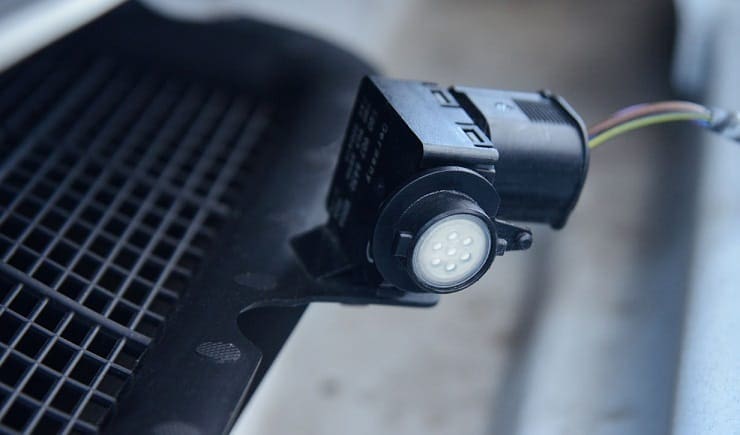
The diagram below shows the elements in the air quality sensor. On the left side, outside air flows into the sensor. Through the filter, the air reaches the sensor element. By means of an electrical resistance measurement, it “measures” the air pollution in the intake outside air. The sensor electronics translate the resistance value into a digital signal and send this signal to the ECU. The sensor requires a supply voltage and ground to operate. This makes the sensor an active sensor.
Automatic Control:
The sensor starts working after the ignition is turned on. The ECU always receives the sensor value but does nothing with it if the automatic recirculation mode is turned off.
On the interior ventilation (heating / air conditioning) control panel, we find an automatic mode if a vehicle is equipped with such an air quality sensor. In the following two images, the button for automatic recirculation mode is indicated with green arrows.
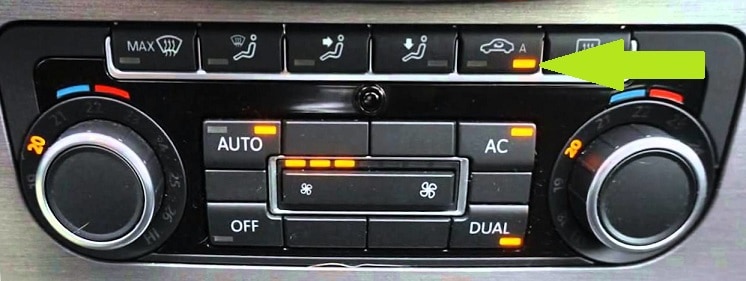
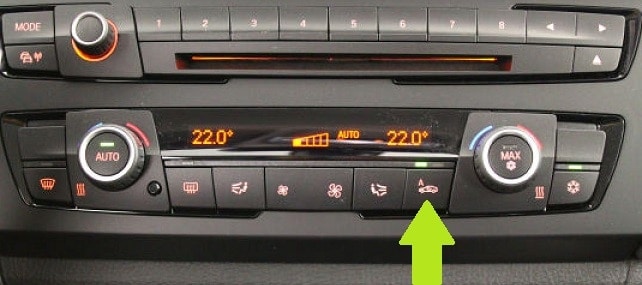
With this recirculation button, you can enable the permanent recirculation mode, automatic recirculation mode, or permanently disable it. If no lights are on, the signal from the air pollution sensor is not used to control the recirculation valve. a0Therefore, it’s best to always keep the automatic mode (A) enabled.
Smart Climate and Air Care:
In recent models from the VAG group, the automatic recirculation mode is no longer displayed with a button or setting in the climate control menu. When the “Auto mode” in the “Classic Climate” menu is activated, all sensors related to climate control are used to maintain a comfortable climate in the vehicle. This includes controlling the different climate zones using temperature sensors in multiple places in the interior and the light intensity sensor. An image of the screen follows…
Installation Location:
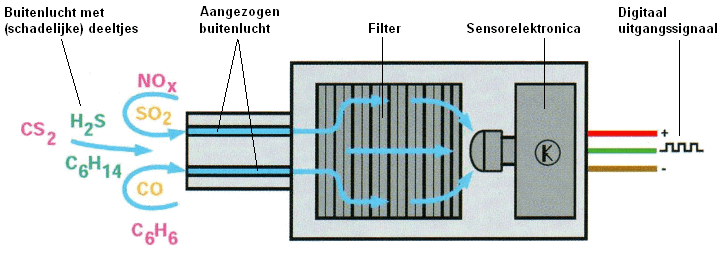
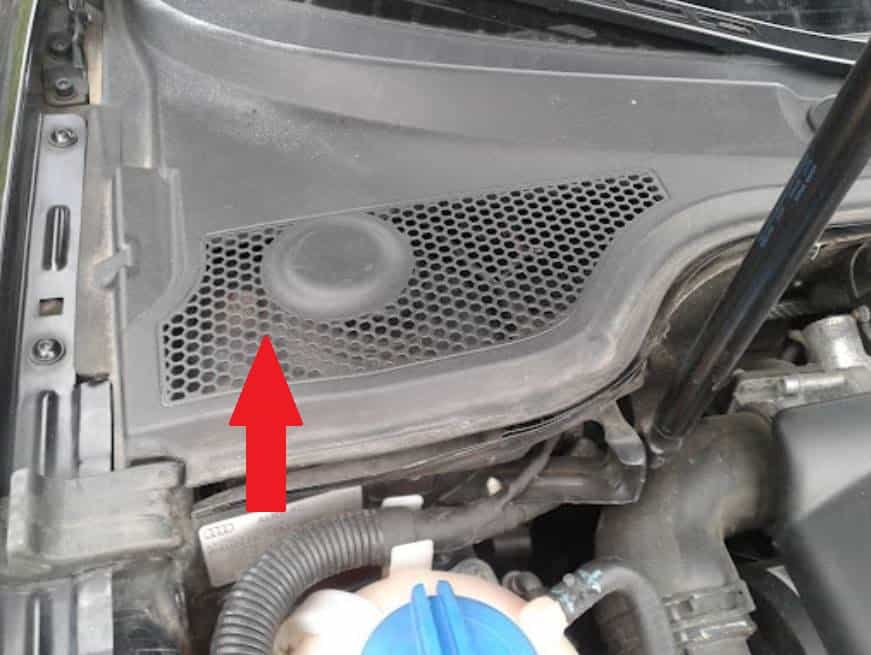
The air quality sensor is located near the intake opening of outside air into the interior. The sensor is often covered by a panel above the plenum chamber, as seen in the following image (bottom left) of a Volkswagen. After removing this panel, the sensor is visible.
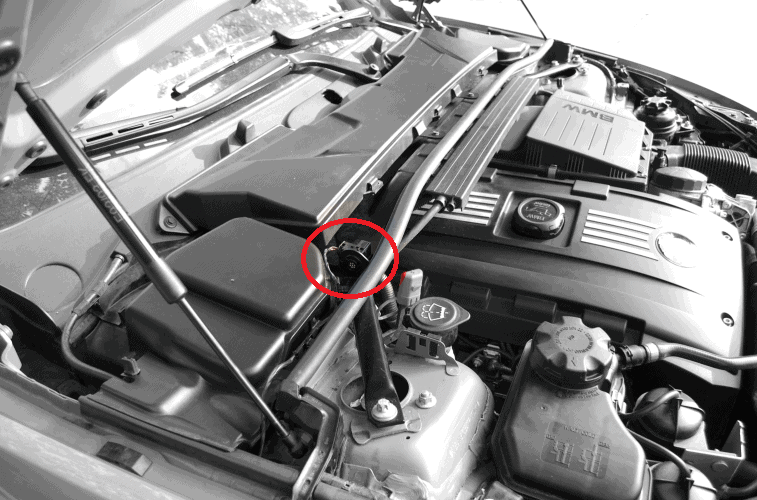
The sensor is also sometimes found immediately after opening the hood in the intake area next to the cabin filter, as shown in the image of the BMW at the bottom right. The sensor is circled in red.
Operation:
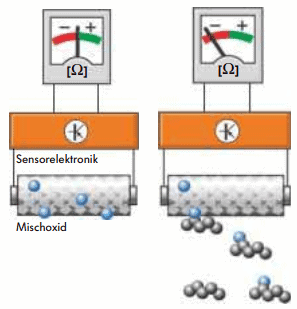
An air quality sensor is a metal oxide semiconductor (MOS). The electrical conductivity changes under the influence of gas. From the change in electrical resistance, it is possible to deduce the presence and concentration of the pollutant. The operating temperature of the sensor element is approximately 350 degrees Celsius. The measurement is similar to the way we know from the lambda sensor.
- Low resistance: oxidizable gases such as carbon monoxide, hydrocarbons, sulfur compounds are present in the intake air;
- High resistance: reducible gases such as nitrogen oxides are present in the intake air.
The following particles in the exhaust gases are recognized by the sensor:
Exhaust gases of gasoline engine:
CO – Carbon monoxide
C6H14 – Hexane
C6H6 – Benzene
C7H16 – n-heptane
Exhaust gases of diesel engines:
NOX – Nitrogen oxides
SO2 – Sulfur dioxide
H2S – Hydrogen sulfide
CS2 – Carbon disulfide
The sensor electronics translate the resistance value into a digital output signal. This signal is sent to the air conditioning control unit. The two images below show the resistance measurement of the sensor element.
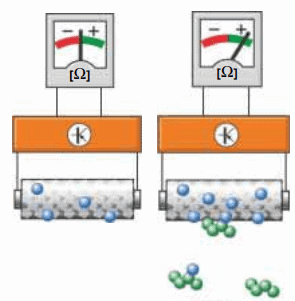
The air conditioning control unit processes the air quality sensor signal and determines if there is a reason to open or close the recirculation valve.
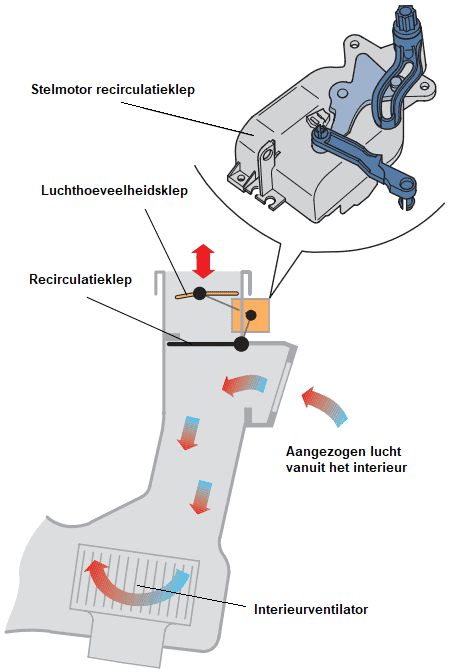
The following image shows part of the heater housing, with the recirculation valve and its actuator motor at the top. In the depicted scenario, the recirculation valve has blocked the outside air supply (no outside air can enter) and has opened the interior opening. The interior fan now draws air from the interior, blowing it through the evaporator and/or heater core to cool or heat the air, which then returns to the interior through the outlets. The air is then recirculated.
We do not want to recirculate permanently: there is a high chance of unpleasant odors, stuffiness for the occupants, and foggy windows. We primarily want to use the recirculation valve to make the air conditioning as cold as possible (cool the cooled air even more) or to prevent outside air from entering the interior.
Related pages: