Air conditioning not working properly:
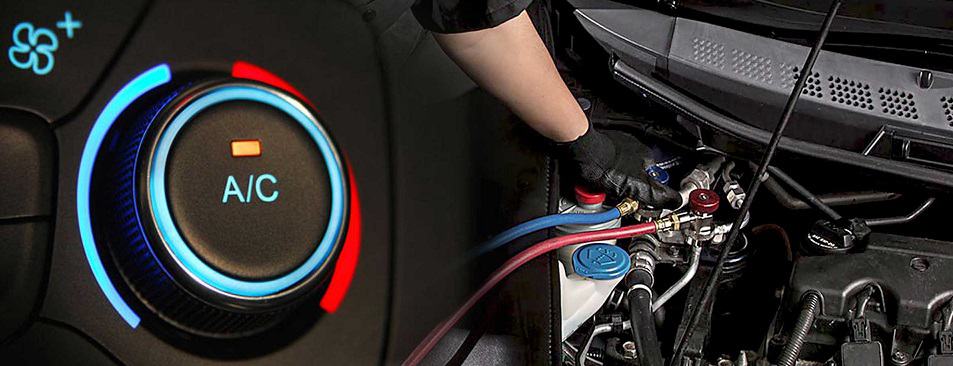
If there are complaints about poor operation of the air conditioning, we try to determine what the complaint exactly involves. We also try to gather more information about when the A/C last had service.
- Check the outlet temperature from the open air vents with the A/C switched on (preferably in recirculation mode or MAX mode; recirculation is automatically switched on in this mode);
- If the air is not cooled sufficiently: check whether the A/C has not had service for more than four years. If so, check whether there is enough refrigerant in the system;
- Check the pressures with the A/C system switched off and on, and check the temperatures of the components. The next paragraphs cover this.
System pressure in the A/C system:
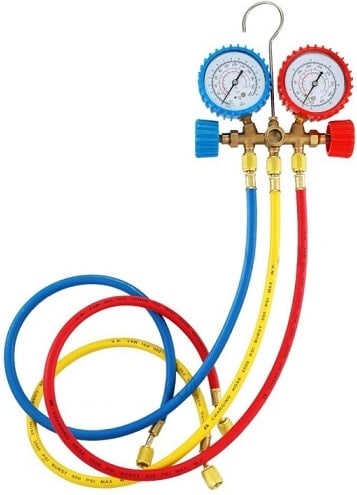
With manifold gauges we can check the pressure in the A/C system. The hoses must be connected to the service ports of the A/C system. When tightening the couplers, the refrigerant will flow from the A/C system to the gauges. If the system is empty, the needles will move and indicate the system pressure. The image below shows such a pressure tester. The pressure gauges are also present on a service station (A/C recharge machine).
The gauge set in the image has two needles and three hoses.
- Blue is low pressure;
- Red is high pressure;
- The yellow hose on the gauge set is used to add nitrogen to the system for leak detection.
If the air conditioning has been off for some time, after connecting the gauges will indicate approximately the same pressure. After starting the engine, low pressure will drop and high pressure will rise. Pressure is related to temperature: when pressure increases, temperature also increases. And vice versa.
- Low pressure drops due to the temperature decrease of the refrigerant after it leaves the evaporator;
- High pressure rises because the liquid refrigerant has warmed up after leaving the condenser.
After a few minutes the pressure will stabilize. The evaporator does not cool down further than a few degrees above freezing, and the fan draws a constant outside-air temperature through the condenser.
When the air conditioning no longer functions properly, in addition to reading out the fault memory (there may be a fault stored for a pressure sensor), we can measure temperature, and also read the pressures with the manifold gauges to make a diagnosis. The pressure level says something about the condition of the system.
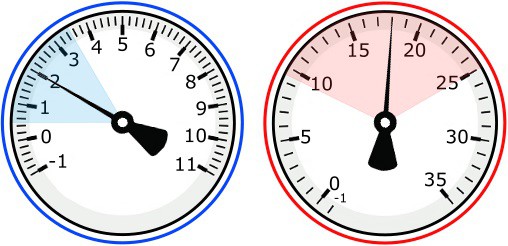
The pressures shown are what we see with a properly functioning system. The blue gauge indicates low pressure (2 bar) and the red indicates high pressure (18 bar). The pressures depend heavily on temperature: as soon as the temperature of the outside air, evaporator, or other components changes, we will immediately see this reflected in the pressure.
The colored sections on the dials indicate the operating pressures:
- Low pressure: between 0.5 and 3.5 bar;
- High pressure: between 9.5 and 25 bar.
In cars we find compressors with the following swash plate types:
- Fixed displacement: low pressure (suction pressure) varies between 1 and 1.5 bar. The magnetic clutch switches the compressor on and off;
- Variable displacement with constant output: the swash plate is adjusted mechanically. Low pressure is a constant 2 bar, regardless of compressor speed. A magnetic clutch provides the drive;
- Variable displacement with controlled output: the swash plate is controlled electrically. Suction pressure varies between 2 and 5 bar and depends on ECU control. This type of compressor does not have a magnetic clutch.
Diagnosing based on system pressures:
In the previous paragraph we saw the system pressure of a properly functioning system. In the event of a fault, we can often see this in the pressures. Whether we are dealing with a leak resulting in too little refrigerant, or when too much has been filled during service, reading the pressures will reveal it. In this paragraph we discuss the possible causes of excessively high or low pressure in the high- or low-pressure circuit. Pay attention to the compressor design!
Low pressure and high pressure 0 bar
- Refrigerant pressure is 0 bar, so there is no pressure in the system. The system is empty and must be checked for leaks before the system is recharged.
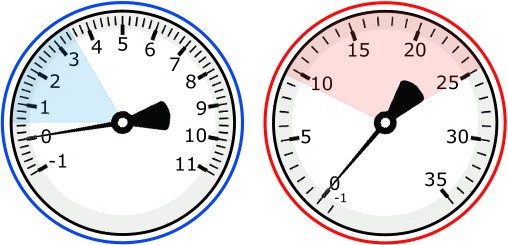
Low pressure and high pressure equal
- The pressure does not change with the A/C switched on or off: the A/C compressor is not functioning. Most likely the compressor is not engaging (due to an ECU enable condition) or the magnetic clutch is defective.
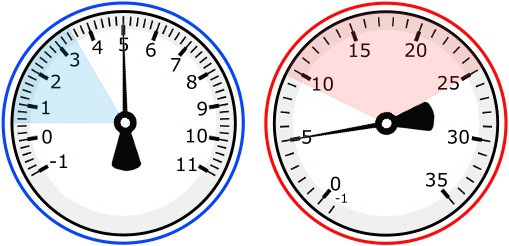
Low pressure high, high pressure normal
- Open expansion valve;
- Defective heater door in the HVAC housing, allowing warm air from the heater to enter the evaporator. Pinch off the coolant hose to the heater core to see whether this affects low pressure.
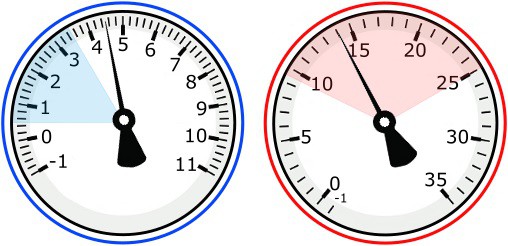
Low pressure high, high pressure high
- Too much refrigerant (measure and calculate the superheat);
- The condenser overheats due to a restriction (possibly visible damage?) or the cooling fan does not work;
- Too much oil in the system: the system may have recently been topped up with too much oil;
- Air in the system.
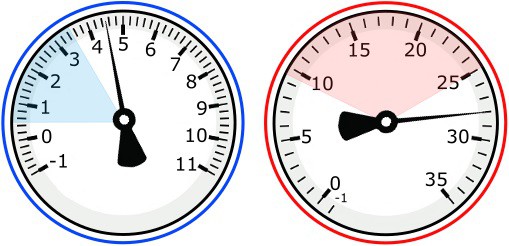
Low pressure high, high pressure low
- Expansion valve has too large a flow opening, or is stuck open;
- Compressor defective. Try turning the compressor by hand and check resistance;
- Control valve for the compressor’s variable output is defective.
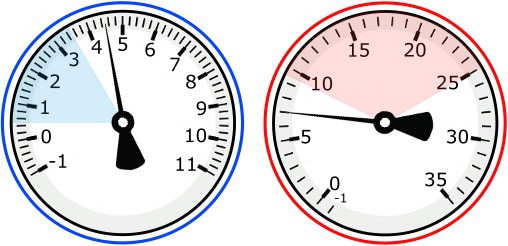
Low pressure low, high pressure low
- Too little refrigerant (measure and calculate the superheat);
- Compressor defective. Check whether the pressure is correct with the compressor switched off, but gives these pressures when switched on;
- High-pressure side partially restricted (pressure with the system switched off should still be OK).
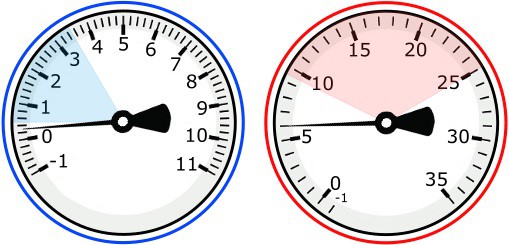
Low pressure low, high pressure normal
- Warm air is present in the evaporator or interior due to a possible problem with recirculation mode or the heater doors / air vents;
- The heater continues to deliver warm air. Possibly due to a stuck heater door;
- The evaporator freezes due to a possible fault in the anti-icing switch or the blower motor.
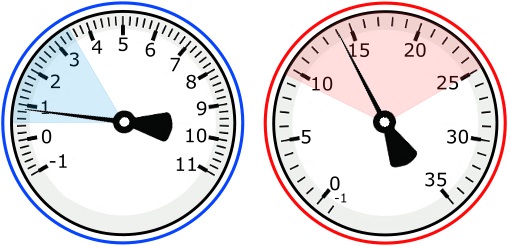
Low pressure low, high pressure high
- Too much refrigerant in combination with another problem;
- Restriction in the high-pressure side, e.g., due to a bent line as a result of a collision;
- Clogged thermostatic expansion valve, due to a mechanical fault or due to ice formation.
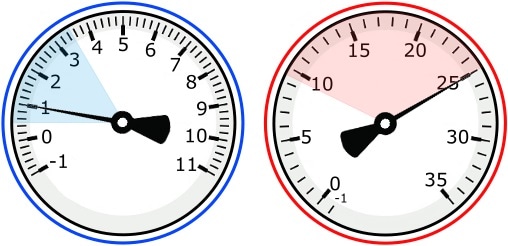
In the last pressure measurement there is low low pressure and high high pressure. With a restriction or blockage in the system, low pressure can drop to 0 bar because the compressor pulls the low-pressure side into a vacuum. In that case, low pressure can also recover slowly: after switching off the A/C, low pressure rises noticeably slowly back to the original pressure. A temperature measurement can be used to locate a possible restriction (as a result of a bent line). Temperature measurement is covered in the next paragraph.
Diagnosing based on pressure and temperature (superheat and subcooling):
As described in the first paragraph, modern A/C compressors with variable displacement and constant output adjust pressure to conditions. Low pressure (suction side) is a constant 2 bar, regardless of engine speed. So measuring 2 bar does not say much about how the system is operating. With temperature measurements, we can make a diagnosis.
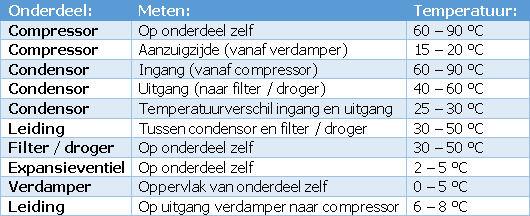
The table below lists the specified temperatures for a properly functioning system. The temperatures are guideline values for an A/C system that has been switched on for at least 10 minutes and at room temperature. At extremely high outside-air temperatures, the temperatures and pressures in the A/C system may differ.
- A good diagnosis can be made with a temperature measurement;
- The compressor temperature must not exceed 90 °C: the oil can start to boil;
- A temperature difference of 30 °C between the inlet and outlet of the condenser is OK. A smaller temperature difference may be caused by poor flow through the condenser, reducing its performance.
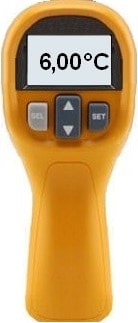
The following images show a low pressure of 2 bar, high pressure of 18 bar, and a temperature of 6 °C on the suction line after the evaporator (evaporator outlet to the compressor).
In the evaporator, the refrigerant transitions from saturated vapor (vapor-liquid) to fully gaseous. The temperature of the refrigerant rises from 2-5 °C (from the expansion valve) to 6-8 °C at the outlet of the condenser.
Superheat:
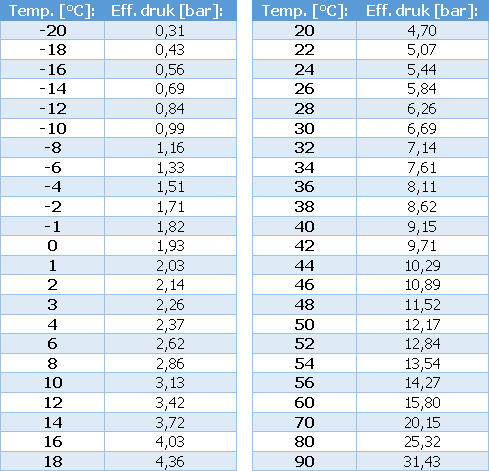
With the measured pressure and temperature, we can calculate the superheat. Superheat is the difference between the suction line temperature and the evaporating temperature of the refrigerant.
- With a properly functioning system, superheat is around 5 to 6 °C
- Superheat more than 6 °C: the system charge is too low. When evacuating the system, for example, 200 grams may be recovered from the system, while the specified charge is 800 grams;
- Superheat less than 5 °C: the system charge is too high. There is (much) more refrigerant in the system than the manufacturer specifies.
To calculate superheat, we need the table next to it to look up the evaporating temperature at a certain pressure. In the table we see that at a pressure of 2.03 bar the refrigerant evaporates at a temperature of 1 °C.
When the air conditioning does not function properly, we can use these data to determine the cause. The three examples below clearly show properly functioning and malfunctioning systems.
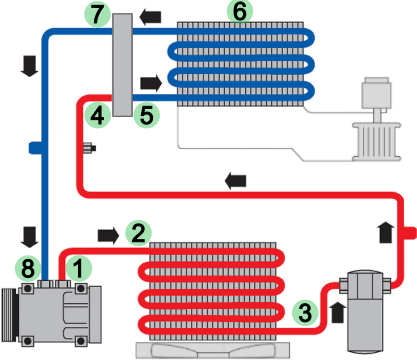
Example 1 calculating superheat with a properly functioning air conditioning system:
Pressures and temperatures with the engine off:
- LP: 6 bar, 20 °C (outside temperature)
- HP: 6 bar, 20 °C (outside temperature)
Pressures and temperatures measured with the engine running at 2000 rpm and the A/C switched on for 15 min:
- 12 bar, 85 °C
- 12 bar, 82 °C
- 12 bar, 50 °C
- 12 bar, 42 °C
- 2 bar, 1 °C
- 2 bar, 6 °C
- 2 bar, 7 °C
- 2 bar, 9 °C
Conclusion example 1:
If there are complaints about an A/C that is not cooling well, we can go through the following five steps to say something about the condition of the A/C system:
- With the A/C switched off, both high and low pressure are 6 bar. This is OK;
- With the A/C switched on, low pressure drops to 2 bar. This pressure is regulated by the variable compressor. High pressure depends on condenser temperature: here we measure 12 bar.
- We measure the temperature at the evaporator outlet with an infrared thermometer: it is 6 °C;
- We look up the evaporating temperature of the refrigerant that corresponds to the value measured on the low-pressure line: at 2 bar, the evaporating temperature is 1 °C;
- We calculate superheat by subtracting the evaporating temperature from the suction line temperature: (6 – 1) = 5 °C.
With a properly functioning system, superheat is around 5 to 6 °C, so based on this measurement we can conclude that the A/C system is OK.
Example 2 calculating superheat with a not properly functioning air conditioning system:
Pressures and temperatures with the engine off:
- LP: 5 bar, 20 °C (outside temperature)
- HP: 5 bar, 20 °C (outside temperature)
Pressures and temperatures measured with the engine running at 2000 rpm and the A/C switched on for 15 min:
- 12 bar, 98 °C
- 12 bar, 81 °C
- 12 bar, 55 °C
- 12 bar, 40 °C
- 2 bar, 5 °C
- 2 bar, 13.2 °C
- 2 bar, 14 °C
- 2 bar, 15 °C
Conclusion example 2:
With the system off, high and low pressures are 5 bar. With the engine and A/C switched on, low pressure drops to 2 bar and high pressure rises to 12.0 bar. The pump engages and the A/C should, in principle, now cool properly.
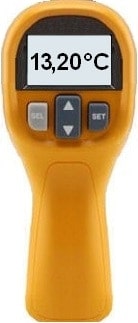
We measure a temperature of 13.2 °C on the evaporator outlet line with an infrared thermometer. This is significantly higher than the 6 °C in example 1.
- Low pressure is again 2 bar, so the evaporating temperature of the refrigerant is 1 °C;
- Superheat is: (13.2 – 1) = 12.2 °C.
Here we see a much higher temperature difference than in the example with a properly functioning A/C. This also reduces the temperature difference with the air flowing through. As a result, the cabin air is cooled less effectively. The passengers notice this as an A/C that is not working properly. The cause is too low a refrigerant charge. The system still operates with the amount of refrigerant present, but no longer as you would expect.
Example 3 calculating superheat with a not properly functioning air conditioning system:
Pressures and temperatures with the engine off:
- LP: 6 bar, 22 °C (outside temperature)
- HP: 6 bar, 22 °C (outside temperature)
Pressures and temperatures measured with the engine running at 2000 rpm and the A/C switched on for 15 min:
- 24 bar, 98 °C
- 24 bar, 81 °C
- 24 bar, 55 °C
- 24 bar, 40 °C
- 3.5 bar, 10 °C
- 3.5 bar, 6 °C
- 3.5 bar, 1 °C
- 3.5 bar, -2 °C
Conclusion example 3:
The pressure, and especially the temperature at the compressor outlet, are too high. Low pressure is also on the high side at all measured points. Between the evaporator and the compressor, the temperature continues to drop, which shows that evaporation is still taking place. If refrigerant still evaporates after the TXV valve, this indicates that there is too much refrigerant in the system.
In addition to reasoning out the cause, we can also prove this mathematically by calculating the superheat. At a pressure of 3.5 bar, the evaporating temperature is 13 °C. The measured temperature is 6 °C. By subtracting the evaporating temperature from the measured temperature, we can calculate the superheat: 6 °C – 13 °C = -7 °C. So the superheat is -7 °C. If superheat is less than 5 °C, the conclusion is: the system charge is too high.
Subcooling:
In addition to the temperature measurement at the condenser, subcooling can also be determined. By subcooling we mean the difference between condensing temperature and the temperature at the condenser outlet. This allows us to determine, among other things, whether the charge is too high or too low, and it confirms that liquid is leaving the condenser. Subcooling is usually between 5 and 15 °C.
- No subcooling means too little refrigerant;
- Too much subcooling is caused by too much refrigerant.
To determine subcooling, we follow these steps:
- With the system switched on, we determine the condensing temperature of the refrigerant in the outlet line at the condenser: in the table, at 12 bar we find a condensing temperature of 50 °C;
- We measure a temperature of 40 °C at the condenser outlet with the thermometer;
- We calculate subcooling as follows: subcooling = condensing temperature – condenser outlet temperature, so (50 – 40) = 10 °C. This value is OK.
The software in the A/C ECU also determines superheat and subcooling if the system is equipped with multiple pressure and temperature sensors. In that way, the ECU can determine that there is too little refrigerant in the system and store a fault code for it, even though the pressures may still appear somewhat OK.
Related page: