Topics:
Cruise Control:
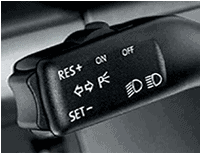
Cruise control is an automatic speed controller, also known as a “cruise controller.” The system makes long-distance driving more comfortable because the driver doesn’t have to continuously press the accelerator pedal.
The cruise control is an electronic system that regulates the fuel supply to the engine, so the set speed is automatically maintained. The driver sets the desired speed with a switch or control lever, and then the accelerator pedal can be released. The car will then continue to drive at the same speed, even on slight inclines.
When the brake or clutch pedal is operated, the system automatically disengages to return control to the driver. In many modern vehicles, the last set speed is saved, allowing it to be easily reactivated. There are different forms of cruise control:
- Conventional cruise control: only keeps the speed constant. The driver sets it with a button or lever. The speed can also be manually adjusted.
- Adaptive cruise control (ACC): automatically adjusts the speed according to the distance to the vehicle ahead using radar or camera sensors. If major deceleration is needed, the ACC also operates the brakes.
- Intelligent cruise control: combines the adaptive function with traffic sign recognition, automatically adjusting the speed to the prevailing speed limit.
Using cruise control can contribute to lower fuel consumption, as the speed remains constant and fewer unnecessary accelerations occur. It also helps the driver avoid speeding violations and increases driving comfort, especially on long highway trips.
The system is particularly suitable for use on relatively flat roads. This is important because vehicles with a low-powered engine and manual transmission may experience problems on inclines, especially when heavily loaded. If the driver does not shift to a lower gear in time, the engine speed may drop too far. This forces the engine to work too hard at low speeds, potentially leading to overheating and higher fuel consumption.
The automatic transmission shifts back itself if the load is too high at a low rpm.
When descending, the cruise control can temporarily shut off the fuel system or inject less fuel to decelerate. Once the set speed can no longer be maintained because gravity increases the vehicle’s speed, the driver must intervene. If the system is at its minimum setting and the speed continues to increase, the engine rpm may become too high, increasing the risk of engine damage.
Therefore, it is important for the driver to turn off the cruise control in a timely manner when driving uphill or downhill and manually monitor the engine speed by selecting the appropriate gear.
Malfunctions:
The engine management system continuously monitors the signals from the clutch and brake pedal sensors, as well as the signals from the cruise control switch. When the system detects an abnormal or illogical sensor value, the cruise control is automatically deactivated or cannot be activated. This prevents the car from unintentionally accelerating or decelerating, thereby avoiding dangerous situations.
When reading the engine management system with diagnostic equipment, a fault code is stored. This code, combined with live data, indicates whether the switch signal is correctly transmitted in a rest state and during operation.