Topics:
Introduction:
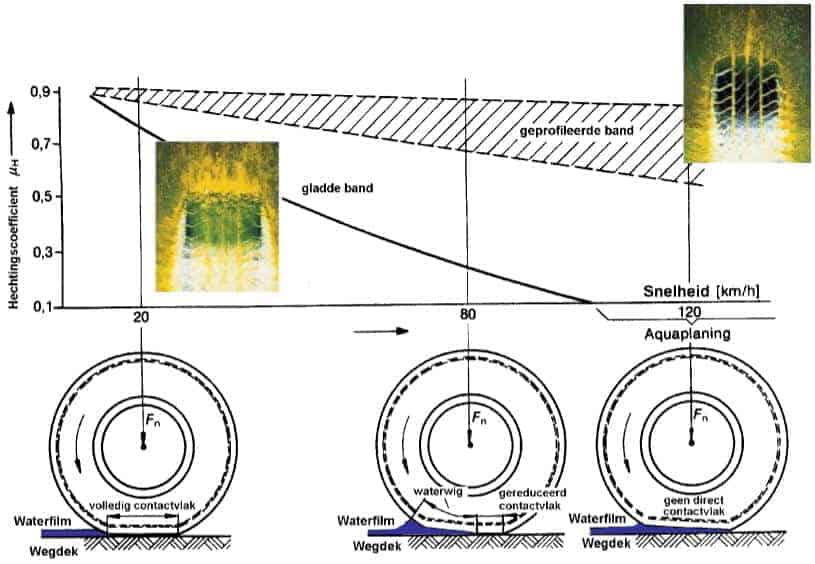
Aquaplaning means that a film of water develops between the road surface and the car’s tire. The tire then loses grip with the road surface and essentially “floats.” This makes the vehicle unmanageable. The risk of aquaplaning increases when driving through ruts in the road surface, with tires that have little tread depth, low tire pressure, a car with little weight combined with wide tires, excessive speed, or a combination of these factors.
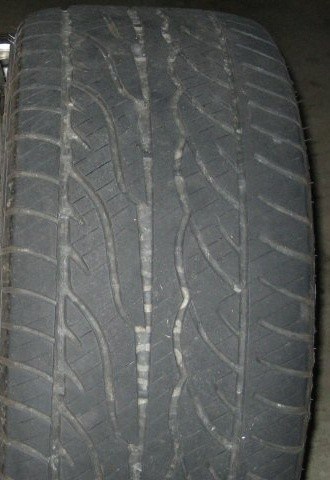
The image shows a tire with less than 2.5 mm of tread in the center. Because less water can be displaced during rainfall than a tire with, for example, more than 5 mm of tread, the likelihood of aquaplaning—and thus also the likelihood of collisions—increases. It is therefore advisable to replace tires with less than 2.5 mm of tread.
Acting in Aquaplaning:
When accelerating during aquaplaning, the wheel without grip will spin faster, only splashing water between the tire and the road surface. Braking will reduce the water film between the tire and road surface, but then there is a risk that when the tire regains contact with the road, it will have too low a speed, and thus skidding danger arises again because the speed of the wheel is too low. It is best to release the accelerator and brake with the engine until contact with the road is reestablished. The speed can then be adjusted again.