Introduction:
The car alarm ensures the security of the vehicle. The different classes indicate which security features are linked to the system. The higher the class, the more comprehensive it is. Some insurers also offer discounts on premiums (often only when an official certificate is provided).
Different Classes:
- Class 1: Immobilizer
- Class 2: Class 1 + alarm system with siren, ultrasonic sensors, or radar
- Class 3: Class 1 + 2 + siren including backup battery, tilt detector
- Class 4: Class 1 + 2 + 3 + Vehicle tracking system
- Class 5: All systems of class 1 to 4.
The difference between class 4 and 5 is that the vehicle tracking system is activated when the alarm goes off. This is not the case with a class 4 system.
All systems mentioned here are described in the following chapters.
Immobilizer:
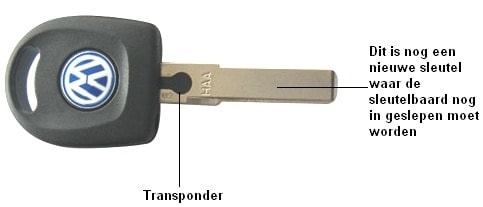
A security system class 1 has an immobilizer (sometimes also called an anti-theft device). The key contains a transponder with a code. The control unit of the car’s immobilizer must recognize (and approve) this code before the engine can be started.
Alarm Control Unit:
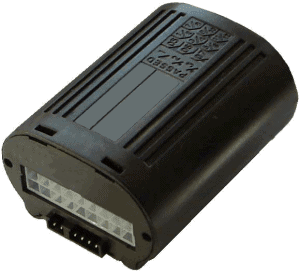
The control unit receives signals from the door locks, ultrasonic, tilt, and/or radar sensors. If a signal is detected while the alarm is activated, the control unit triggers the siren and the hazard lights. The unit is activated as soon as the car is locked with the remote control. Mechanically locking with the key will not activate the system.
- Cars without CAN bus: the existing central door locking device sends signals from the doors, trunk, and hood to the separate alarm control unit. When retrofitting, wires will need to be pulled to connect to the existing wiring, including the wiring for the turn signal installation.
- Cars with CAN bus: the alarm control unit will be connected to the 2 CAN bus wires of the comfort circuit. After registering via a diagnostic tool (thereby integrating into the system), no separate wires need to be drawn as in a car without a CAN bus. The signals travel through the entire CAN bus network and also reach the alarm control unit.
Siren:
When the alarm system (class 2, 4, or 5) is activated and the sensors inside the car detect someone inside (ultrasonic or radar), a door opens (signal from the door locks), or if the car is lifted (tilt detection), the alarm control unit activates the siren. Most sirens produce a sound level of around 125dB. Each manufacturer uses its own tone. Some produce a beeping sound, while others make a noise with as many different pitches as possible. The siren can be installed in many different locations, with the most common being the wheel arches, engine compartment, or under the cowl plate.
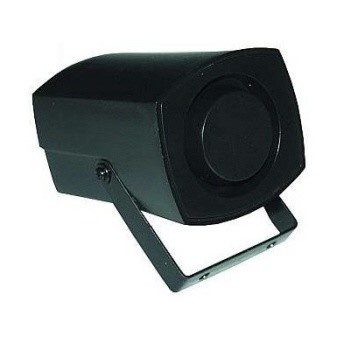
A siren from a class 3 alarm system has a backup battery. If the alarm goes off and the battery terminal is disconnected, the backup battery will continue to power the siren, causing it to sound for a few more minutes. It is strongly advised to replace this backup battery every few years (consult the manufacturer’s data for this). Nowadays, a fault is often stored in the memory when the battery is running low.
Ultrasonic Sensors:
The ultrasonic sensors monitor the interior for movements. As the name suggests, ultrasonic sensors work with ultrasonic waves (similar to Park Distance Control sensors). These sensors send and receive ultrasonic waves. The time between sending and receiving is measured. When the alarm is activated, these sensors calibrate the system in the first minute. The distance between the sensors and objects inside the vehicle (e.g., seats) is stored in the system. When movement in the vehicle occurs (e.g., a window is smashed), the ultrasonic waves hit this object or person, affecting the time between sending and receiving. The alarm system’s control unit will immediately trigger the siren.
The ultrasonic sensors not only detect object movements but are also sensitive to vibrations. If the car is parked with the windows closed, the air inside does not move. Once the windows are opened, air flows through the car, and the sensors will detect this, causing the alarm to sound. If the sensitivity is set very high, loud noises outside the car can also trigger the alarm. This noise can be caused by fireworks or thunderstorms, as sound is purely an air vibration. Once the noise is loud enough and the vibration reaches the car’s interior, the ultrasonic sensors will register it. Because the sensors are sensitive to sound vibrations, they are not suitable for convertibles. If the roof is open and the alarm is activated, it would constantly go off. Therefore, convertibles do not have ultrasonic sensors installed but instead use radar.
Radar:
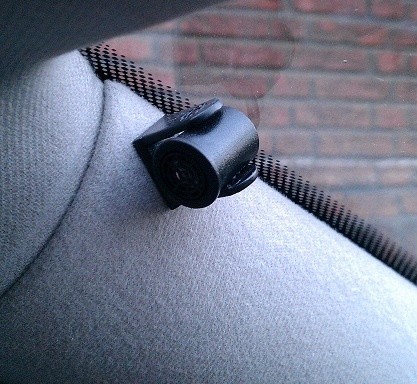
Not only for driving assistance, but a (different type) radar can also be applied to the alarm system. The alarm system radar is discreetly integrated into the interior (see image below). The radar emits signals that are not dependent on sound waves, vibrations, and movements of fast, small objects. This makes radar suitable for convertibles, whereas systems with ultrasonic sensors are not. Radar, in comparison to ultrasonic sensors, is much slower and will trigger the alarm several seconds after a person enters the car. This system must also calibrate itself once the alarm is activated. Additionally, the radar is not limited to just the vehicle’s interior. The signals penetrate the car’s metal and plastic (thus weakening) but will even detect movements that occur directly next to the vehicle. It is possible to adjust the radar so that when someone walks too close to or touches the car, the alarm is activated.
Tilt Detection:
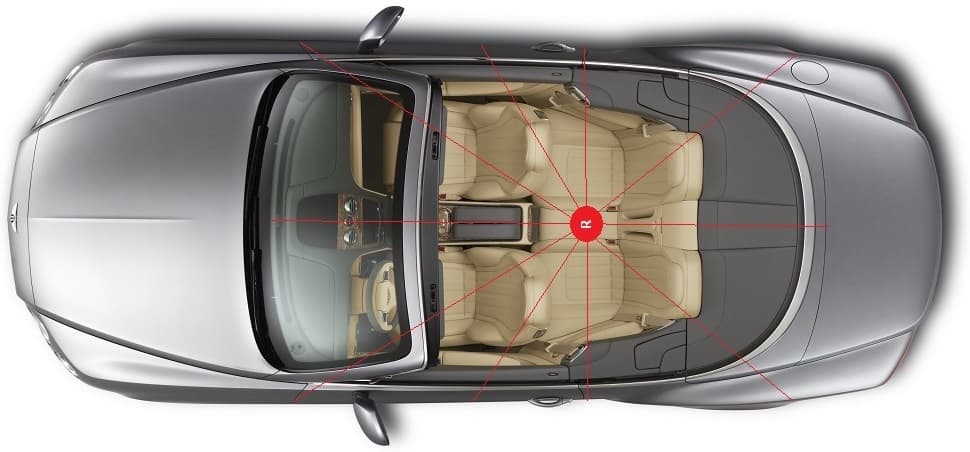
In the interior, often inside the center console, of a class 3 alarm system, the tilt detector is installed. This sensor measures the position of the vehicle by the position of a ball inside it. When the alarm is activated, the position of the movable ball is measured, and once the system calibrates after about a minute, the position is monitored.
If the vehicle’s position changes, such as being lifted, the ball moves further in the sensor. This movement is recognized, and the alarm activates. The vehicle could be lifted to remove wheels or to be towed away. It doesn’t matter if the vehicle tilts backward due to a heavy load in the trunk or if a trailer is attached. When the alarm is activated, the system is calibrated to the position it is in at that moment. If the trailer is detached in the meantime (causing the back to rise), the alarm will also go off.

Vehicle Tracking System:
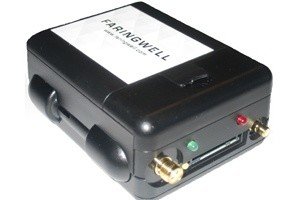
In a class 4 or 5 alarm system, a vehicle tracking system is installed. This is a separate device hidden deep in the interior. It should take as long as possible for a malicious person to find this device. Once the alarm is activated, this device sends GPS coordinates every few seconds via a GSM signal to the control room. The control room (of the alarm system) will immediately alert the police, who will respond. The tracking system will continue to transmit GPS coordinates until the alarm system is deactivated. This system also contains a backup battery that lasts approximately 24 hours after disconnecting the vehicle’s battery.